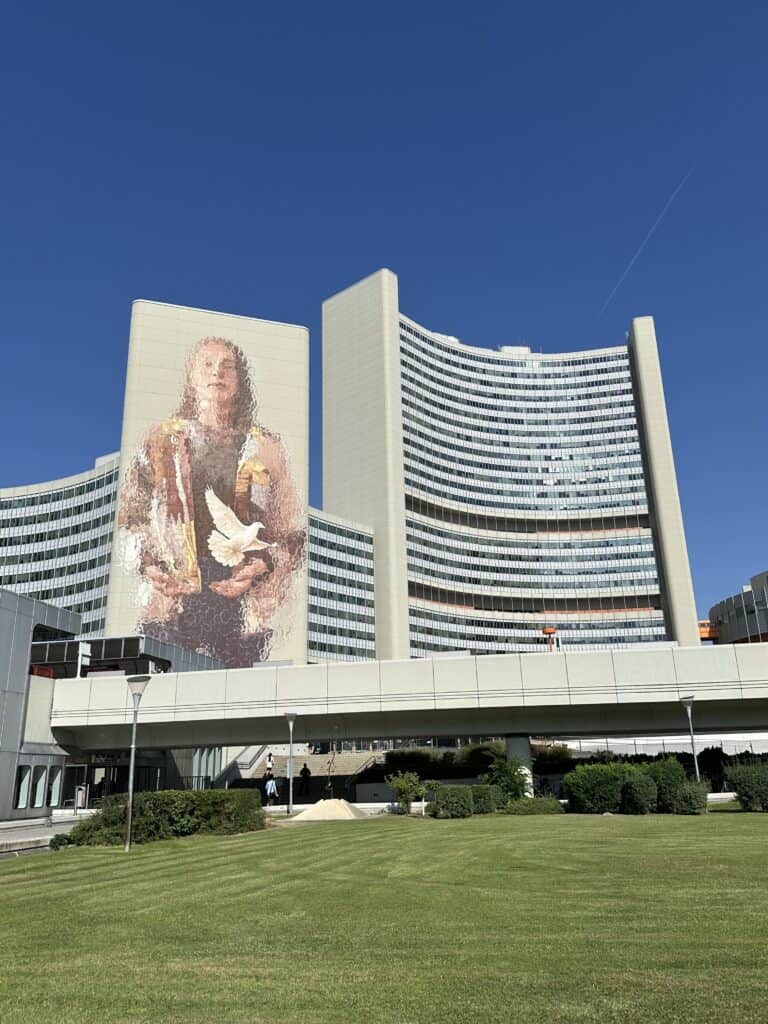
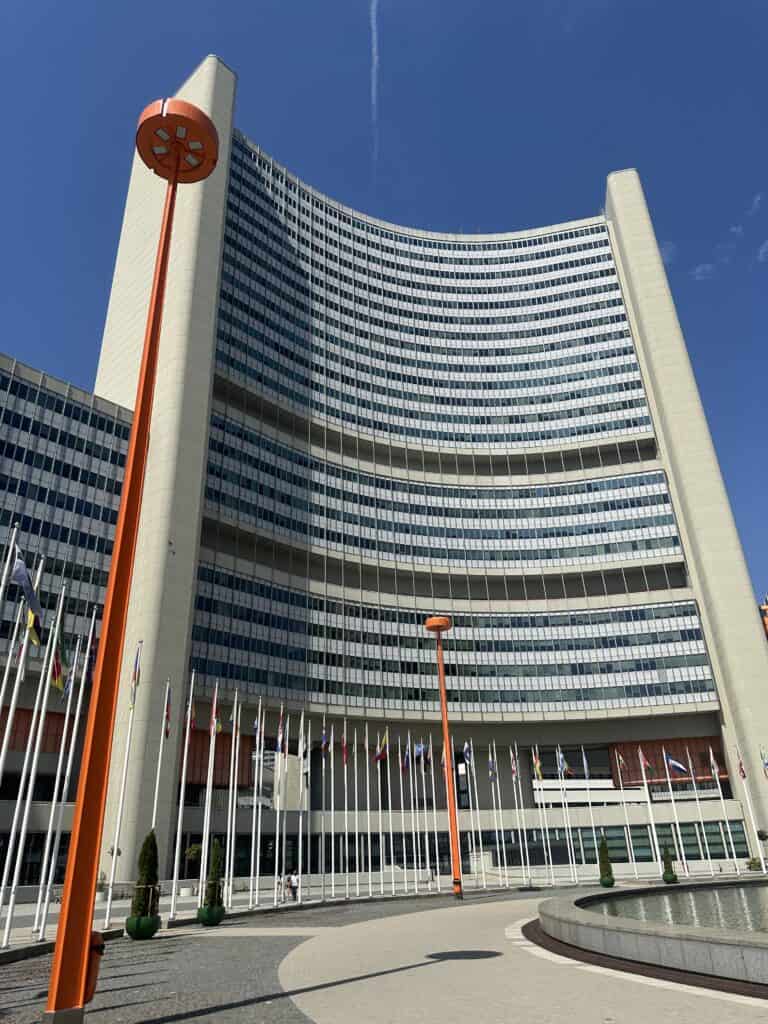
The United Nations Office in Vienna (UNOV) is based at the Vienna International Centre.
The complex is one of the United Nations’ four official headquarters worldwide, alongside New York, Geneva, and Nairobi.
Following the end of World War II and the subsequent Allied occupation, Austria regained full sovereignty in 1955 and declared its permanent neutrality.
This strategic position made Vienna an ideal diplomatic bridge and a buffer zone between the Western and Soviet blocs during the Cold War.
Construction began in 1973 and was completed in 1979. The costs were covered 65% by the Austrian state and 35% by the City of Vienna.
It employs approximately 5,000 staff members and houses international organizations such as:
- IAEA (International Atomic Energy Agency): an autonomous agency that promotes the peaceful use of nuclear energy and monitors against military proliferation.
- UNODC (United Nations Office on Drugs and Crime): a UN office dedicated to the fight against drugs, international organized crime, corruption, and terrorism.
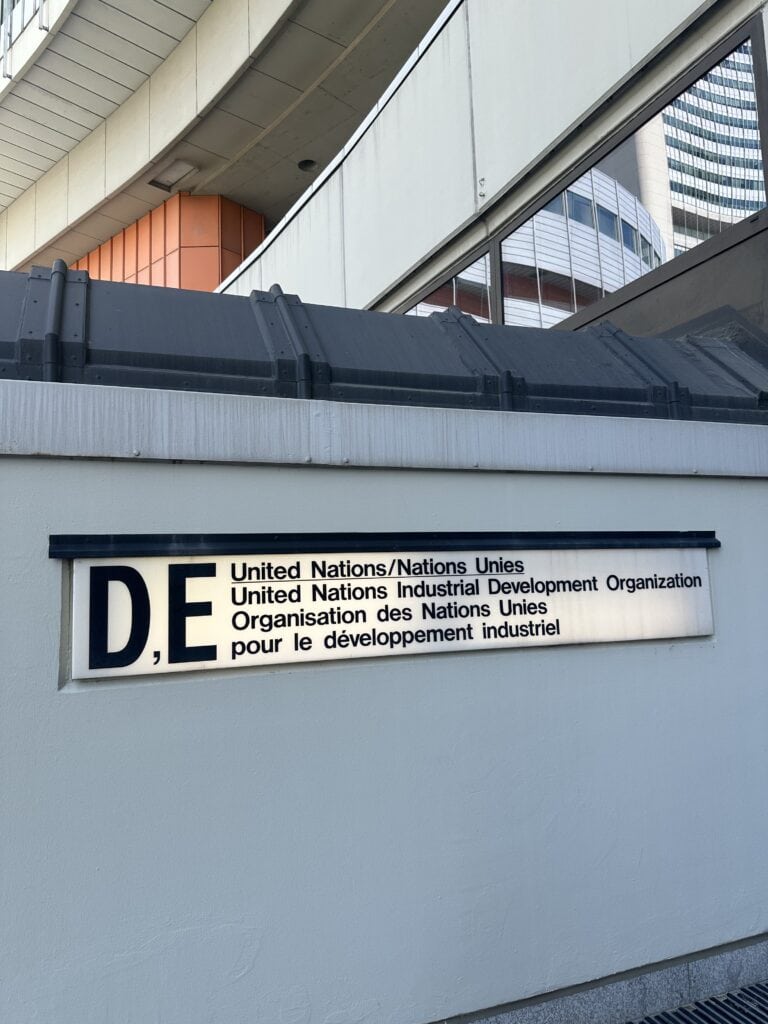
- UNIDO (United Nations Industrial Development Organization): a specialized agency that supports sustainable industrial development, economic competitiveness, and environmental protection in partner countries.
- CTBTO PrepCom (Preparatory Commission for the Comprehensive Nuclear-Test-Ban Treaty Organization): a preparatory organization established to implement the global monitoring system banning nuclear tests on land, in the atmosphere, and underwater.
Visits are possible only via official guided tours lasting approximately one hour.
The guided tour includes institutional areas and conference rooms.
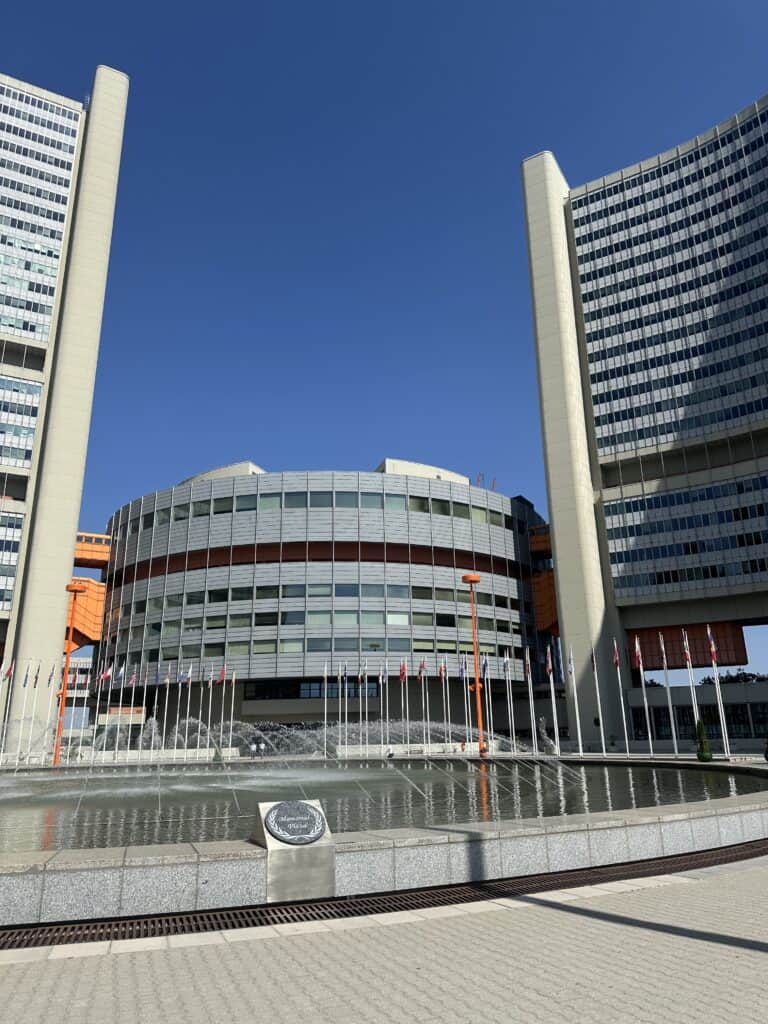
The Rotunda, or Central Plaza, is the architectural centerpiece of the complex; it features a square displaying the flags of all United Nations member states.
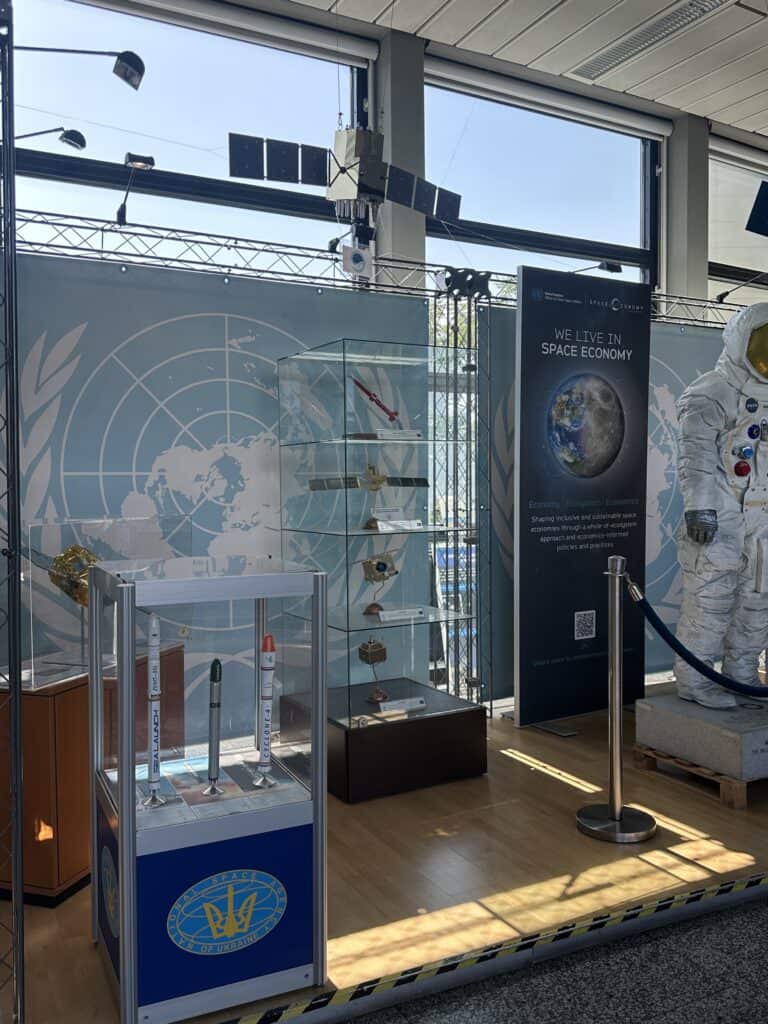
Inside the complex, there is a space exhibition featuring scale models of satellites and space rockets, the signature of Yuri Gagarin—the first man in space—and an authentic fragment of moon rock donated by NASA.