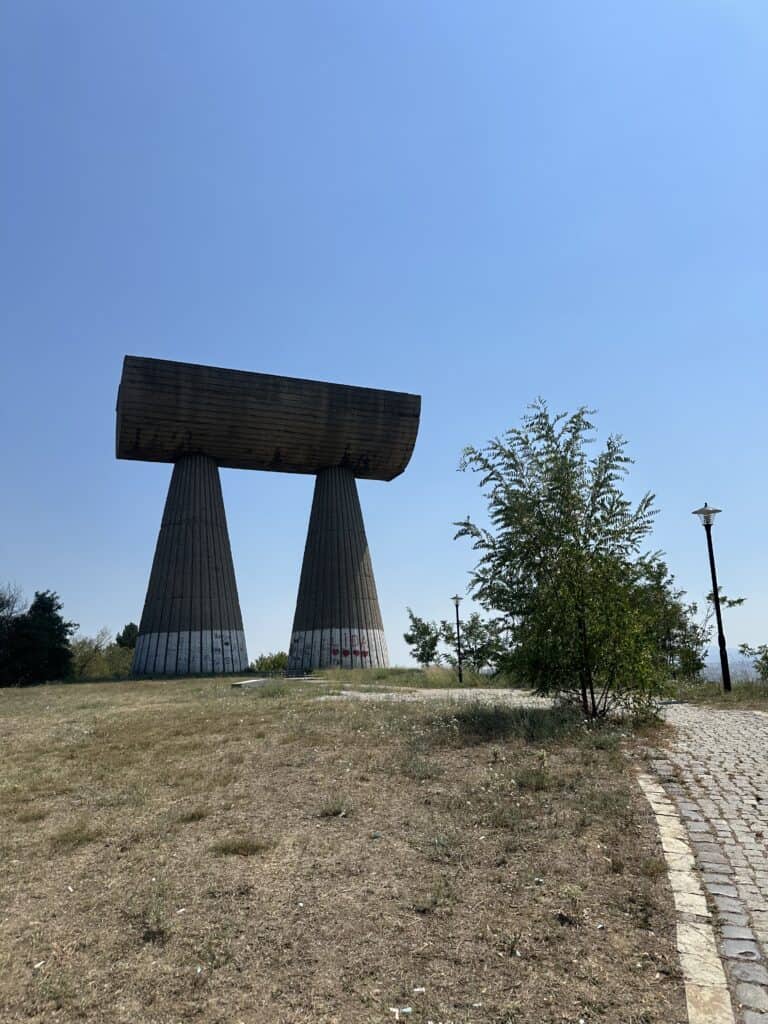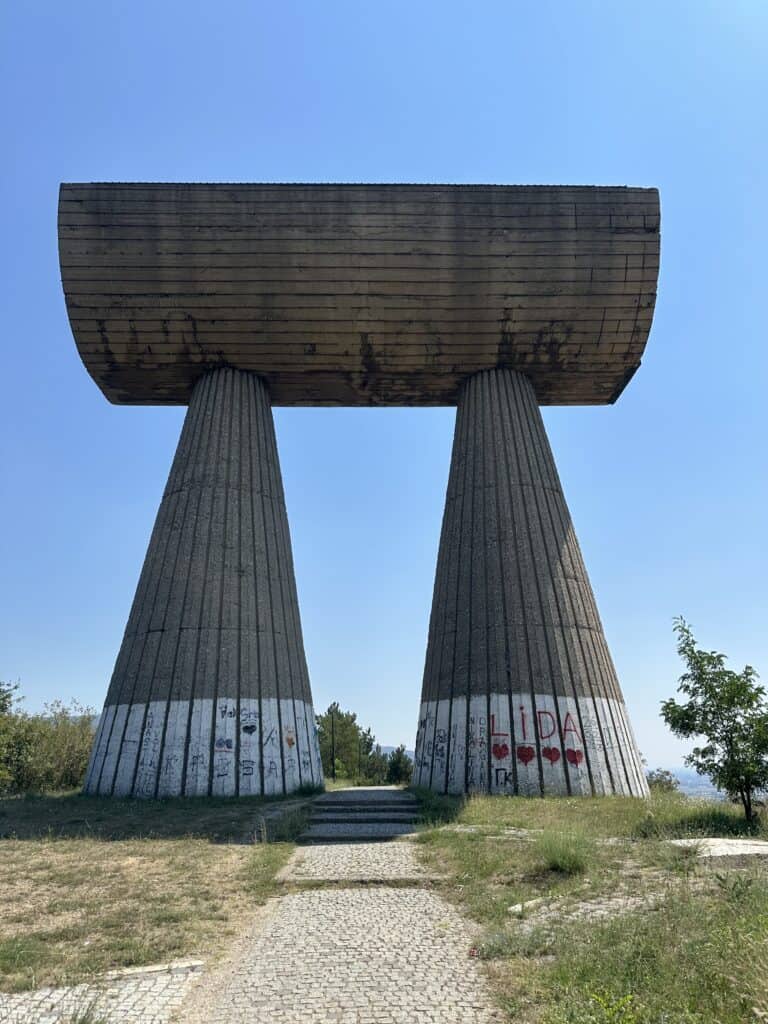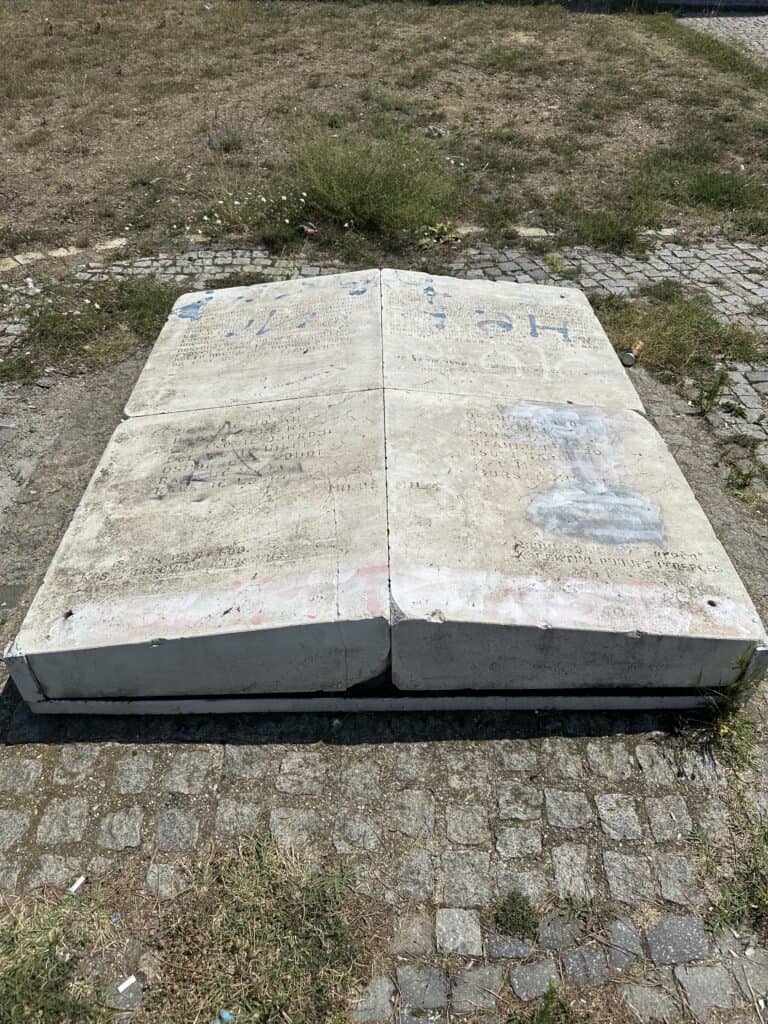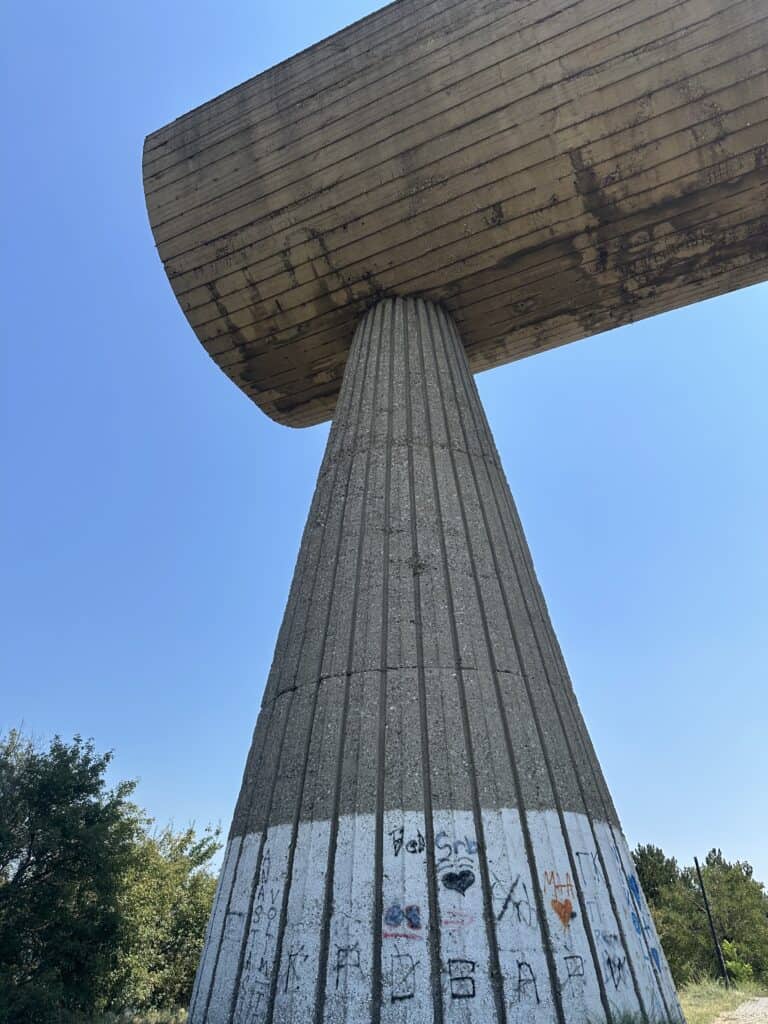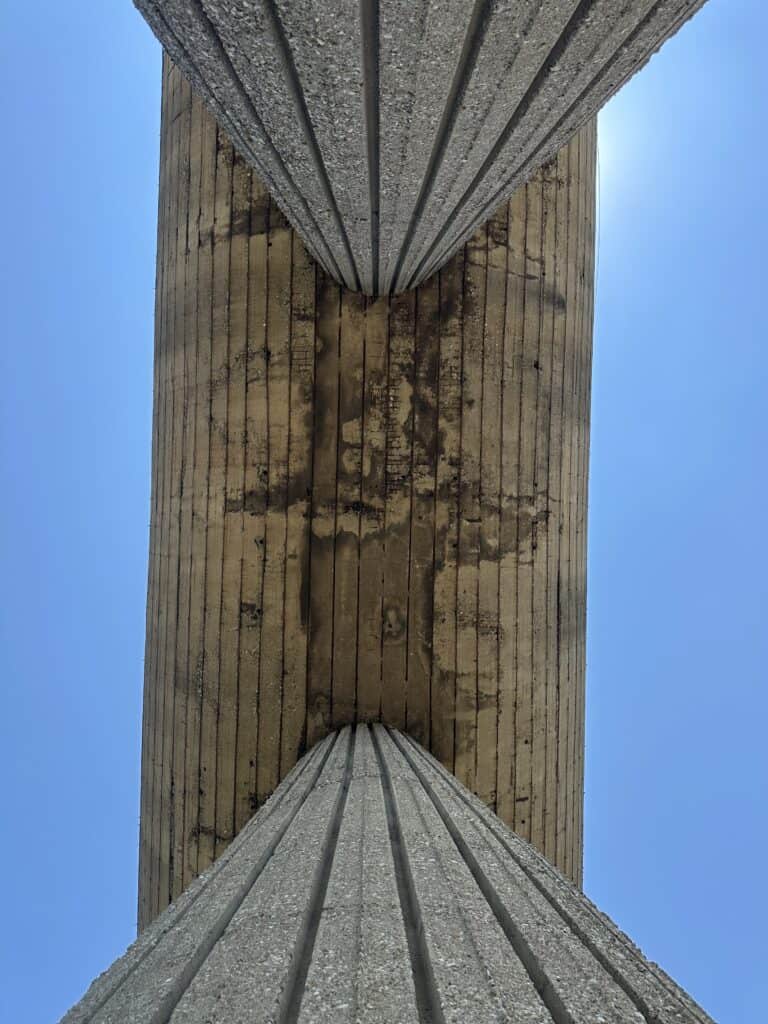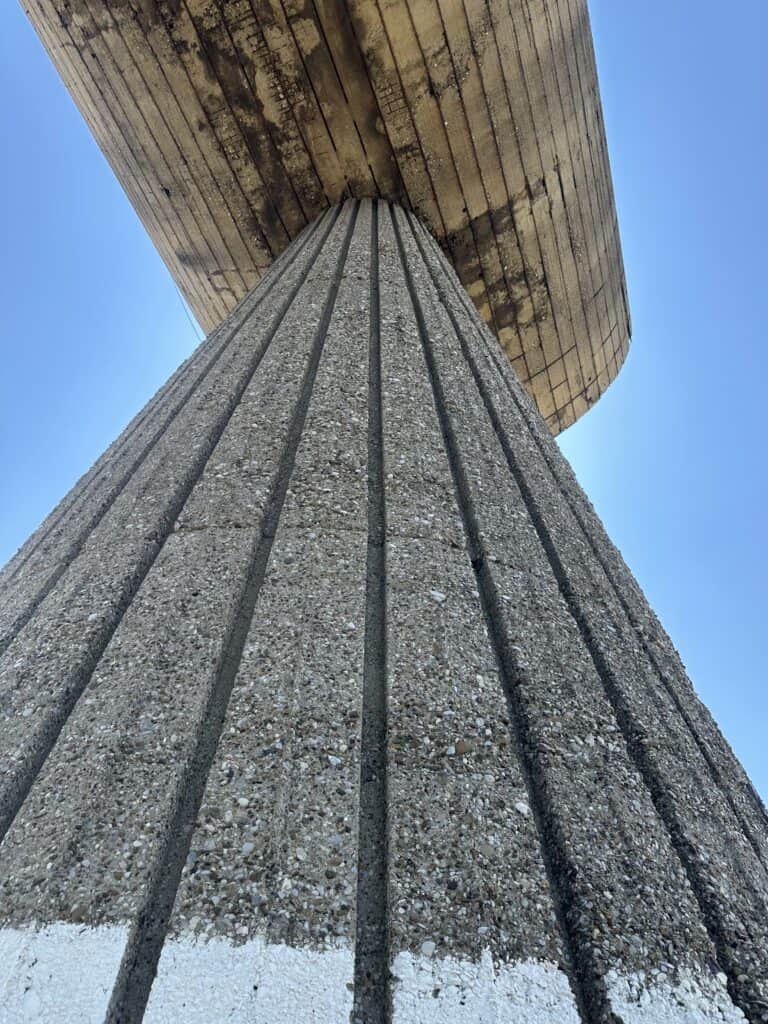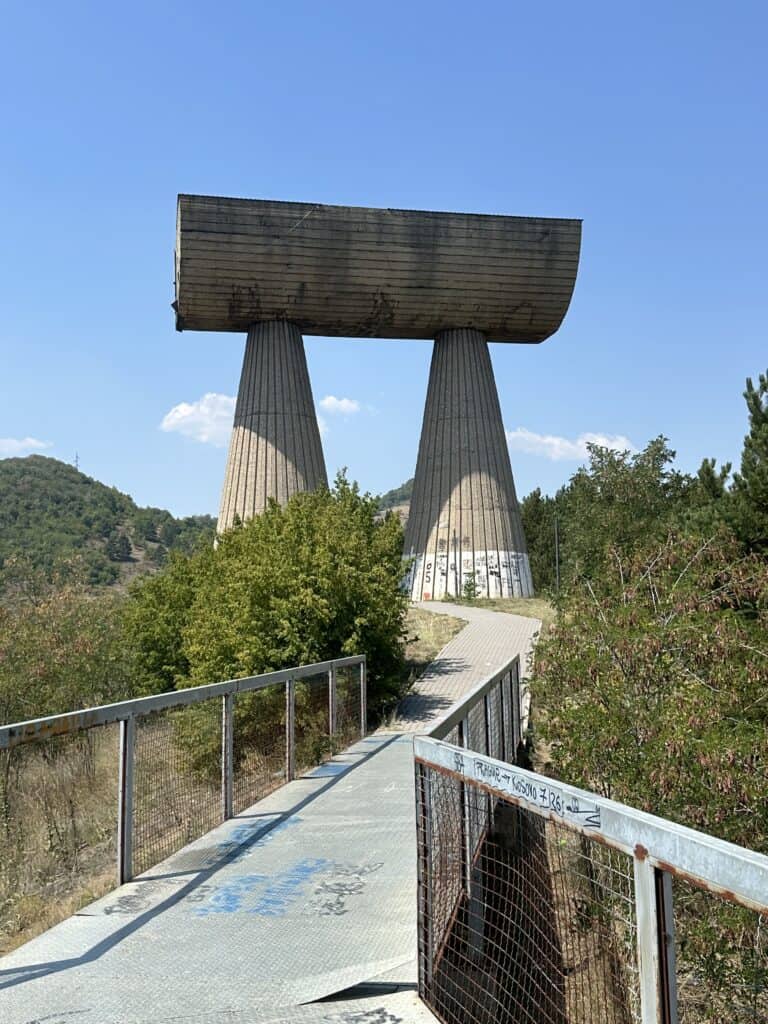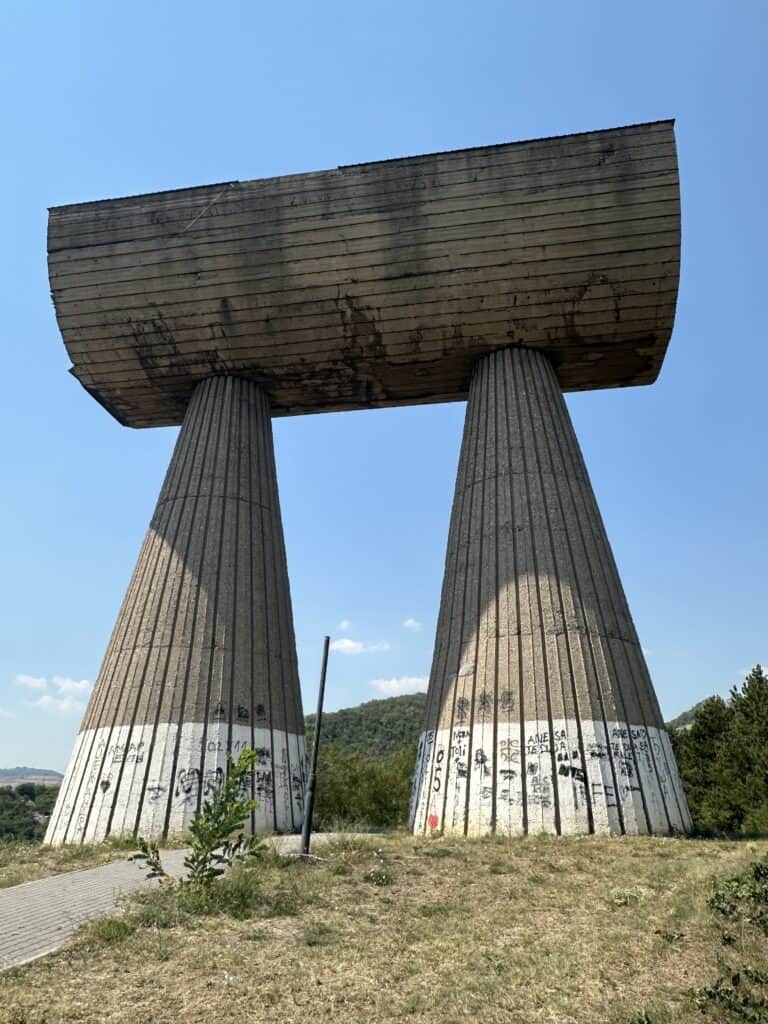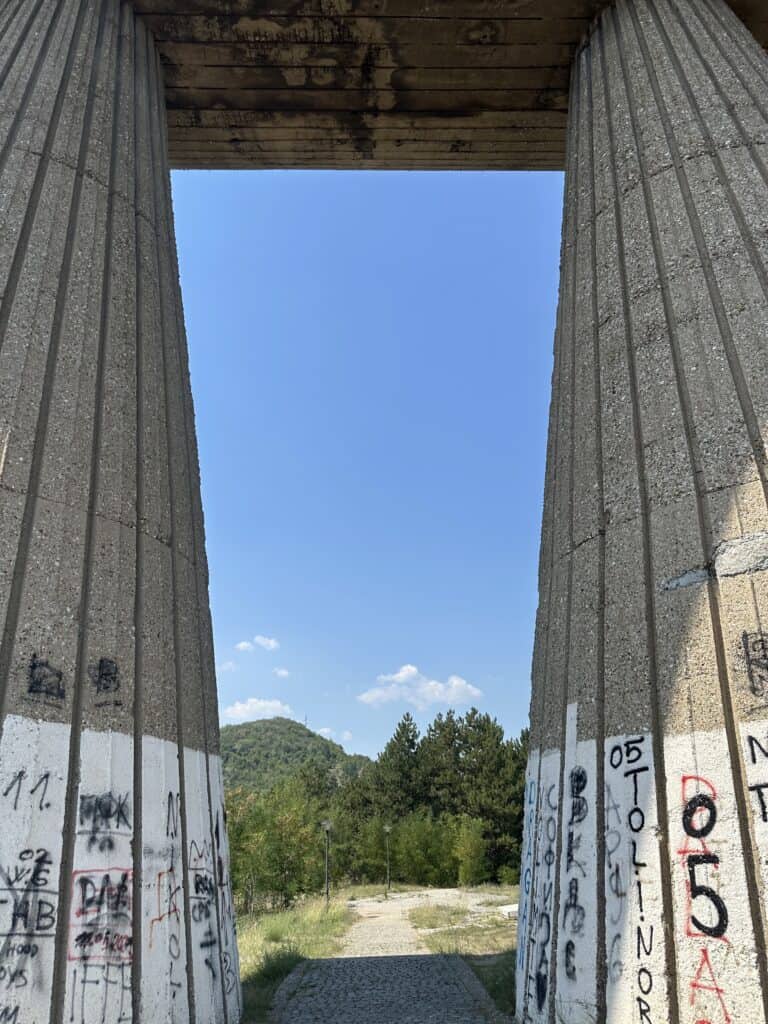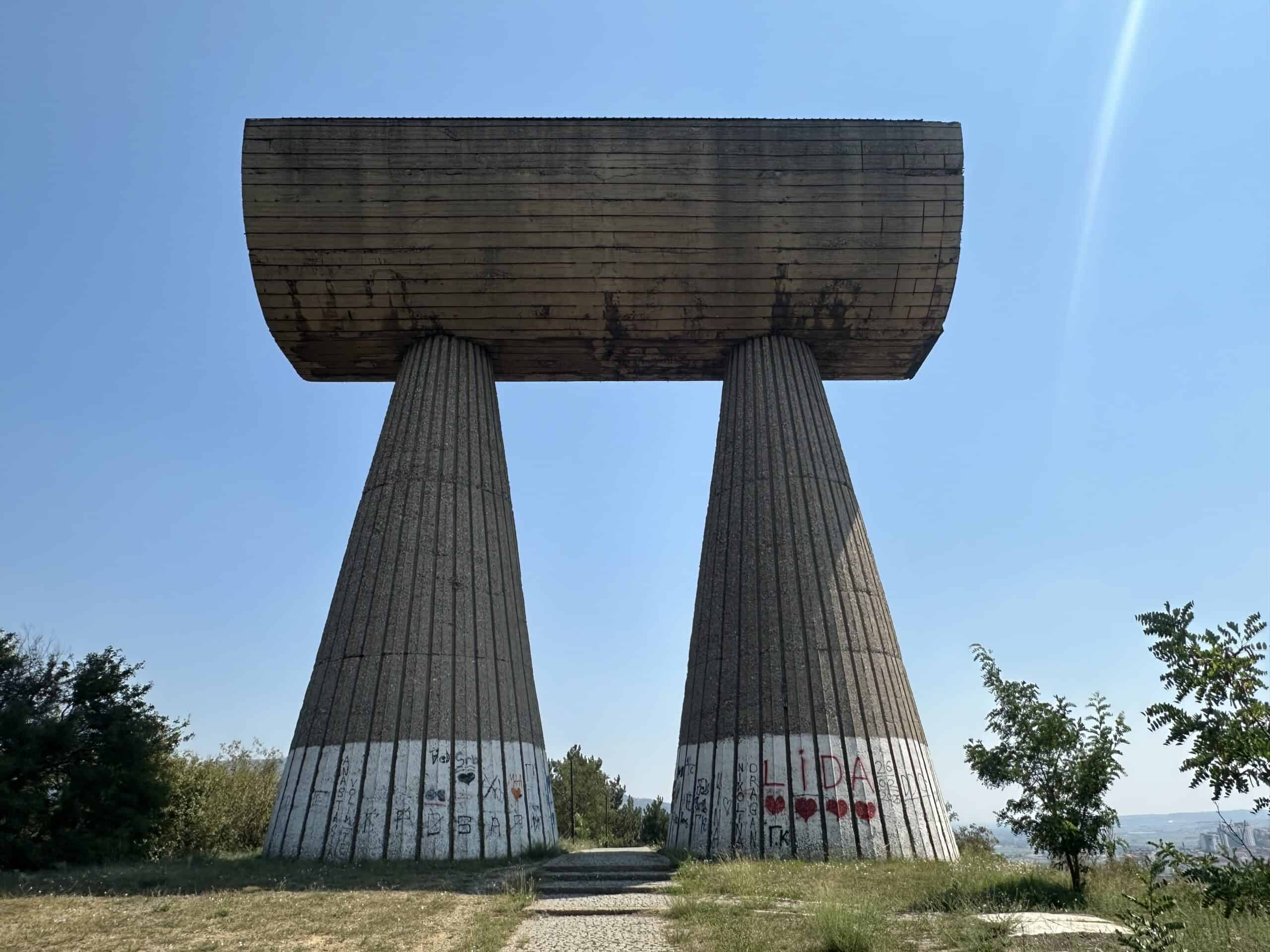
The Monument to the Hero Miners—also known as the Shrine of the Revolution—is an imposing Yugoslav memorial located on Miners’ Hill in Mitrovica, Kosovo.
Designed in 1973, the monument commemorates the 1941 uprising by local miners from the Trepča mine against the Nazi occupation.
The structure is a classic example of a spomenik (a Brutalist monument from the former Yugoslavia) and stands approximately 19 meters tall.
It consists of two massive reinforced concrete conical pillars supporting a geometric shape resembling a large mining cart.
The side faces of the upper section were originally clad in copper plates, creating a striking color contrast with the grey concrete.
As originally intended by Tito and the designer, the two columns symbolized ethnic Albanian and Serbian workers, united in peaceful coexistence and the anti-fascist struggle, transcending national divisions.
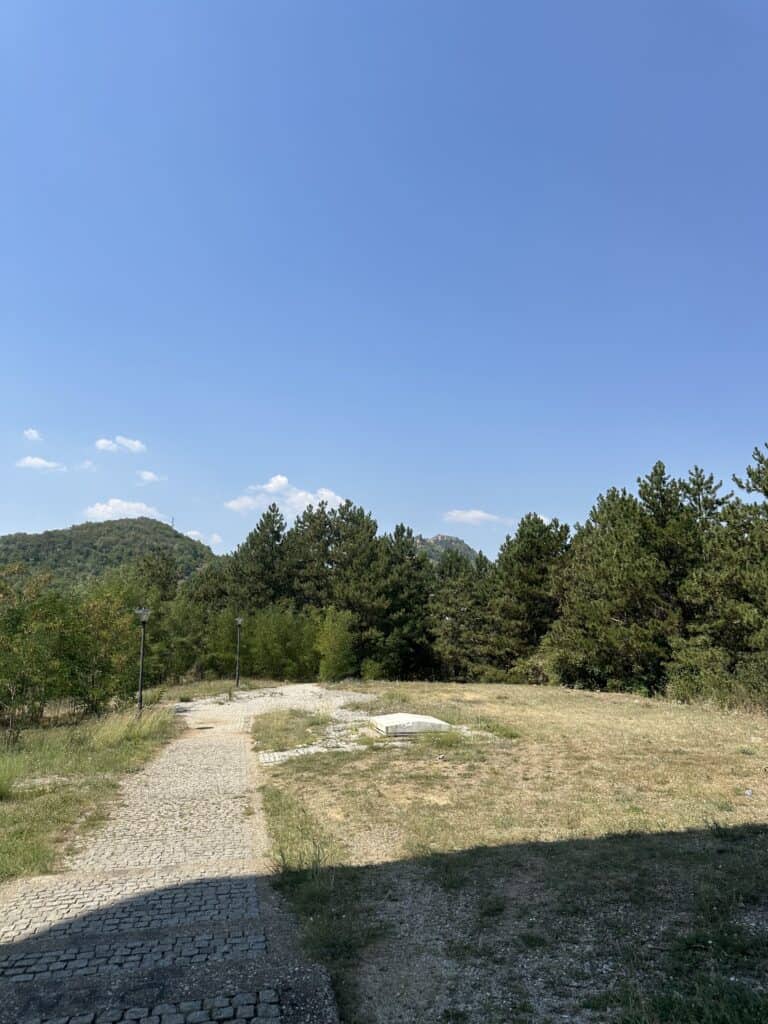
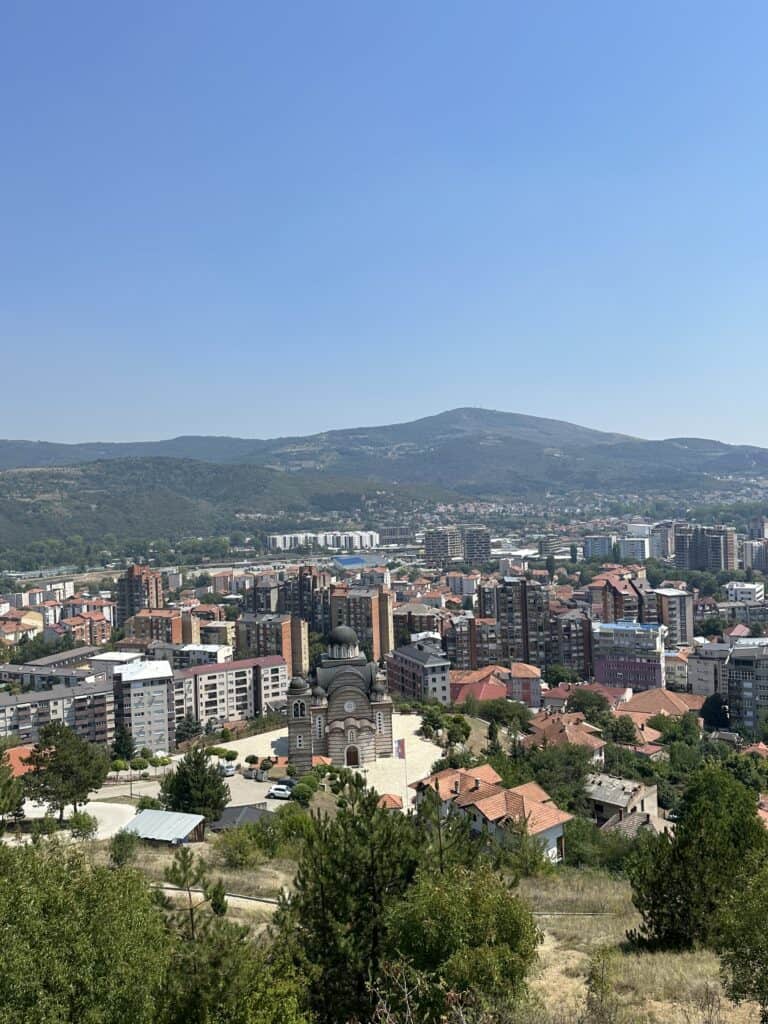
The monument stands at the highest point in Mitrovica and is visible from almost every part of the city.
Today, the monument bears the marks of time and geopolitical conflict; the concrete walls at its base are often covered in graffiti and political slogans, reflecting the city’s tensions.
The 1941 miners’ uprising in Mitrovica represents one of the most significant episodes of the Partisan Resistance in the Balkans during World War II.
Before the outbreak of World War II, the Trepča mining complex (located just a few kilometers from Mitrovica) was one of Europe’s richest sites for zinc and lead extraction. In 1941, following the invasion and partition of Yugoslavia by Axis forces, Nazi Germany assumed direct control of the area.
The Trepča mines supplied approximately 40% of the lead required by the German war industry—a material vital for the production of ammunition and batteries for U-boats operating in the Atlantic.
Harsh, exploitative conditions, combined with an anti-fascist ideological drive, led Serbian and Albanian workers to organize a resistance.
The spark was struck on 30th July 1941, when a group of miners carried out a clandestine operation, blowing up key infrastructure of the industrial aerial tramway used to transport raw ore to the Zvečan smelters.
This act of sabotage temporarily paralyzed the Nazi war machine’s supply chain and dealt a severe logistical blow.
Following the successful sabotage in July and a second wave of attacks in September, many miners were forced to abandon the mines to escape Gestapo reprisals.
The insurgents took refuge in the surrounding mountains and joined the partisan movement led by Tito; this led to the formation of the “Miners’ Company,” a partisan unit composed of both Albanian and Serbian fighters.
The miners fought throughout the conflict, which culminated in the liberation of Mitrovica on 23th November 1944.