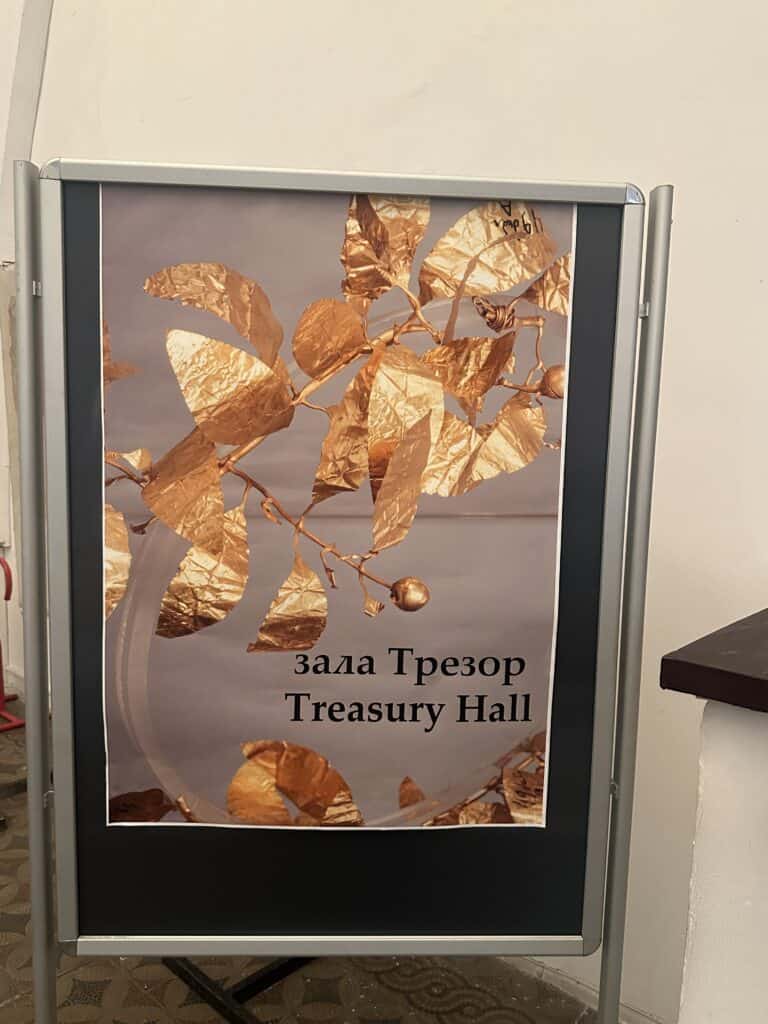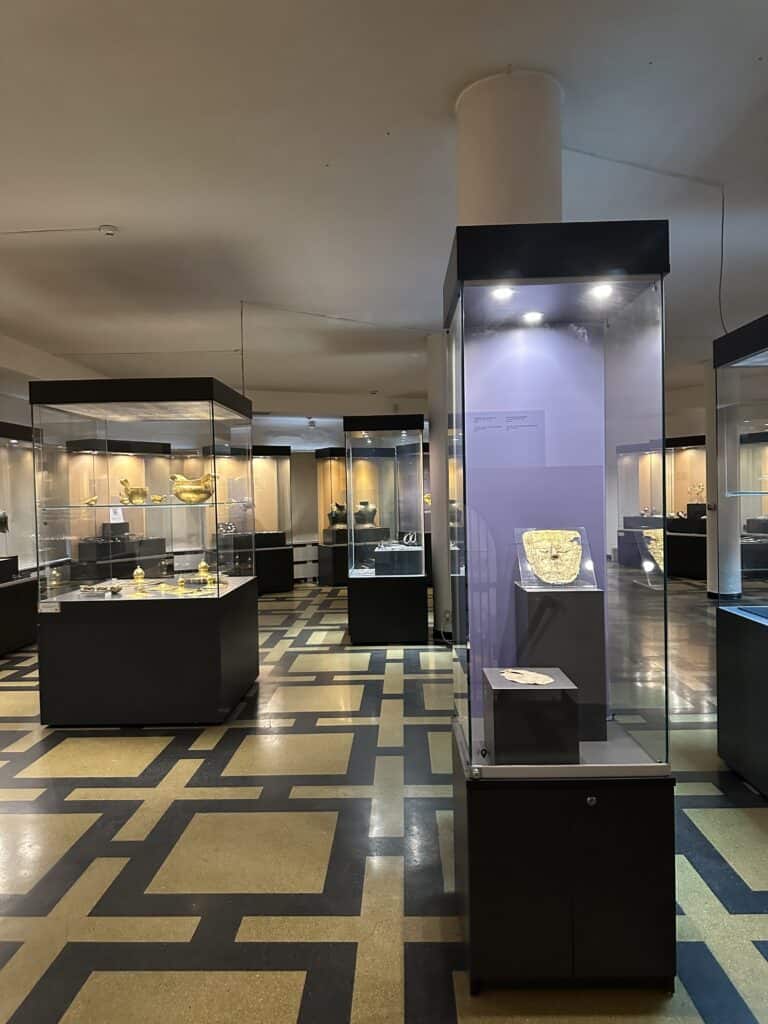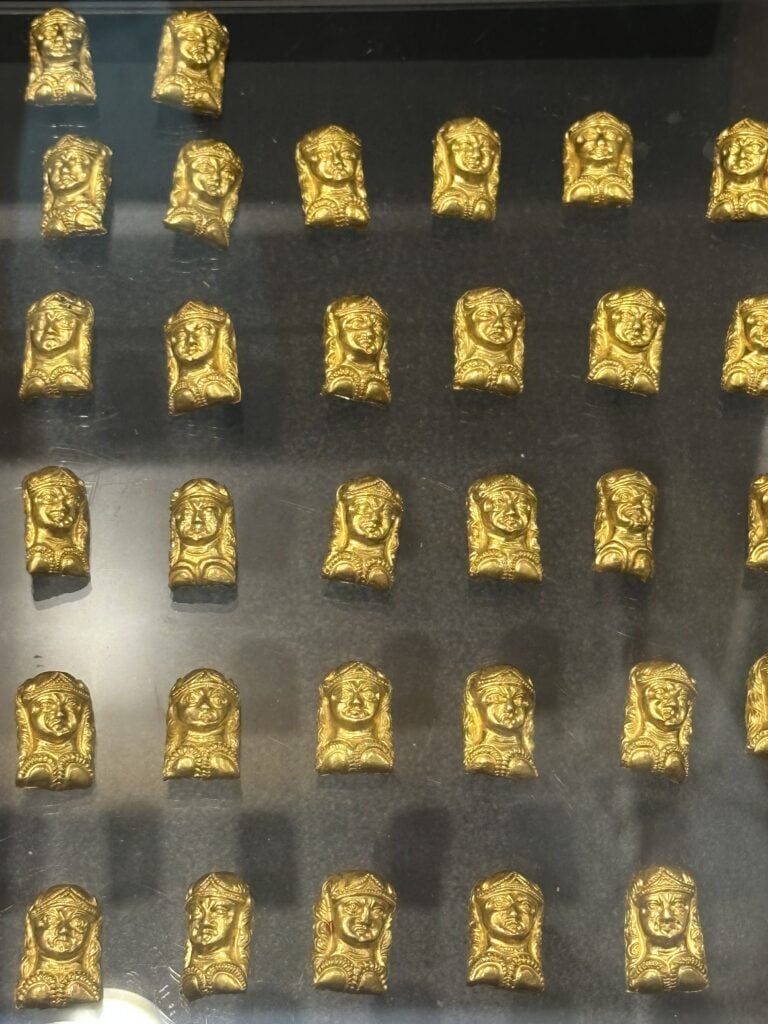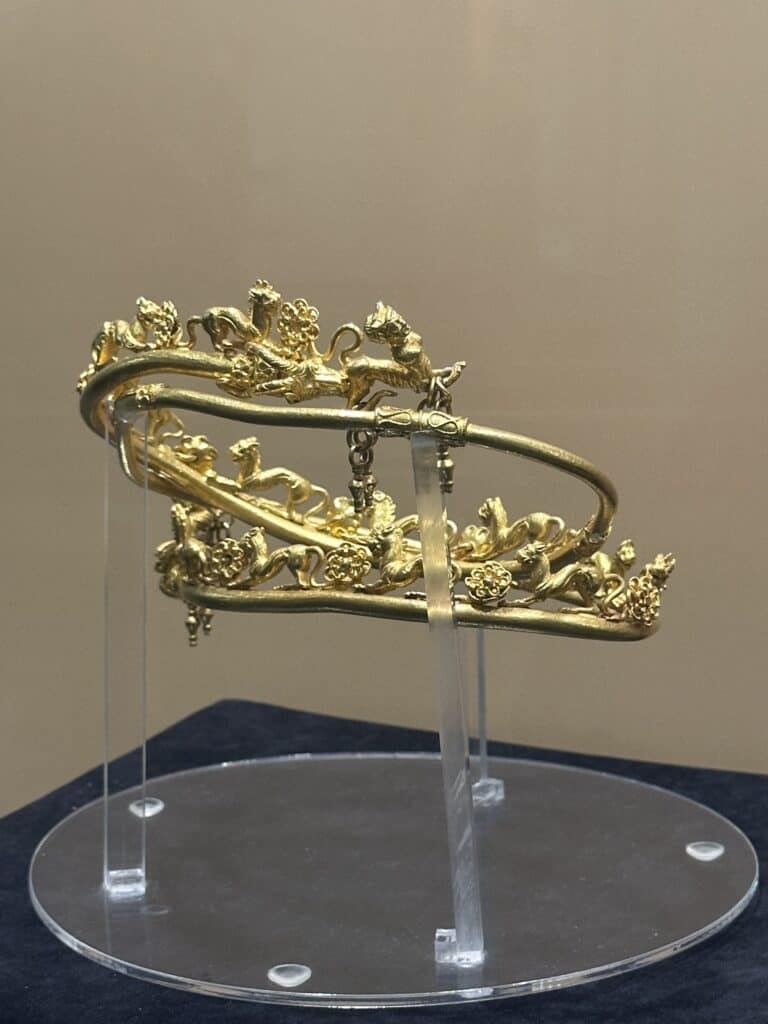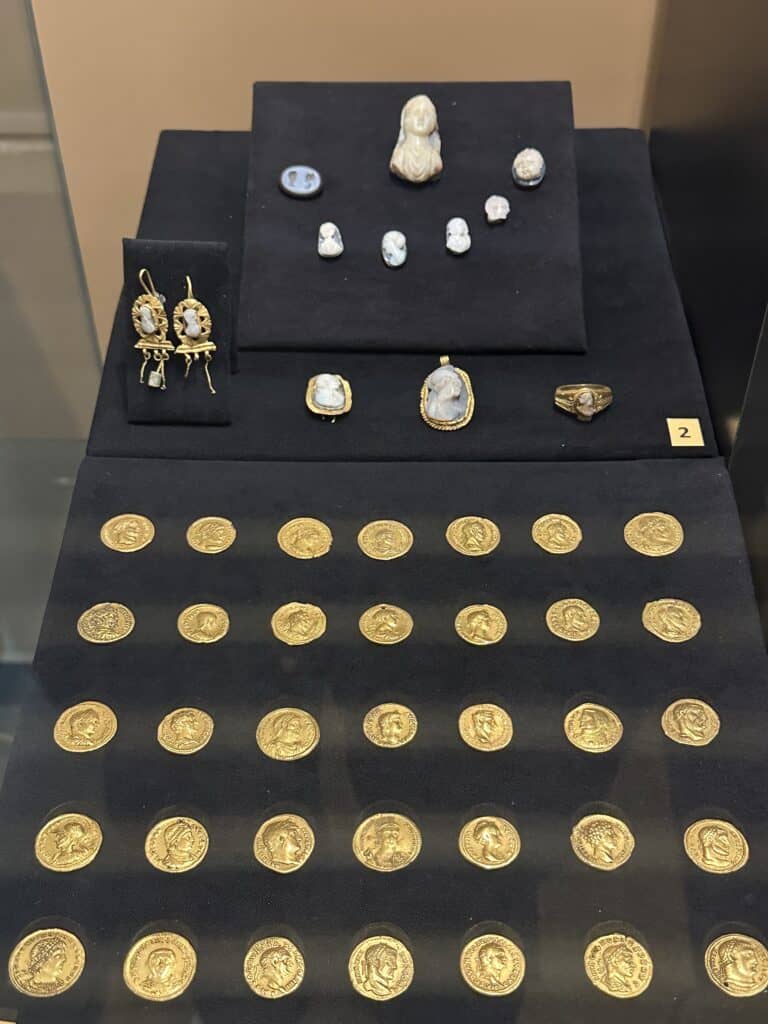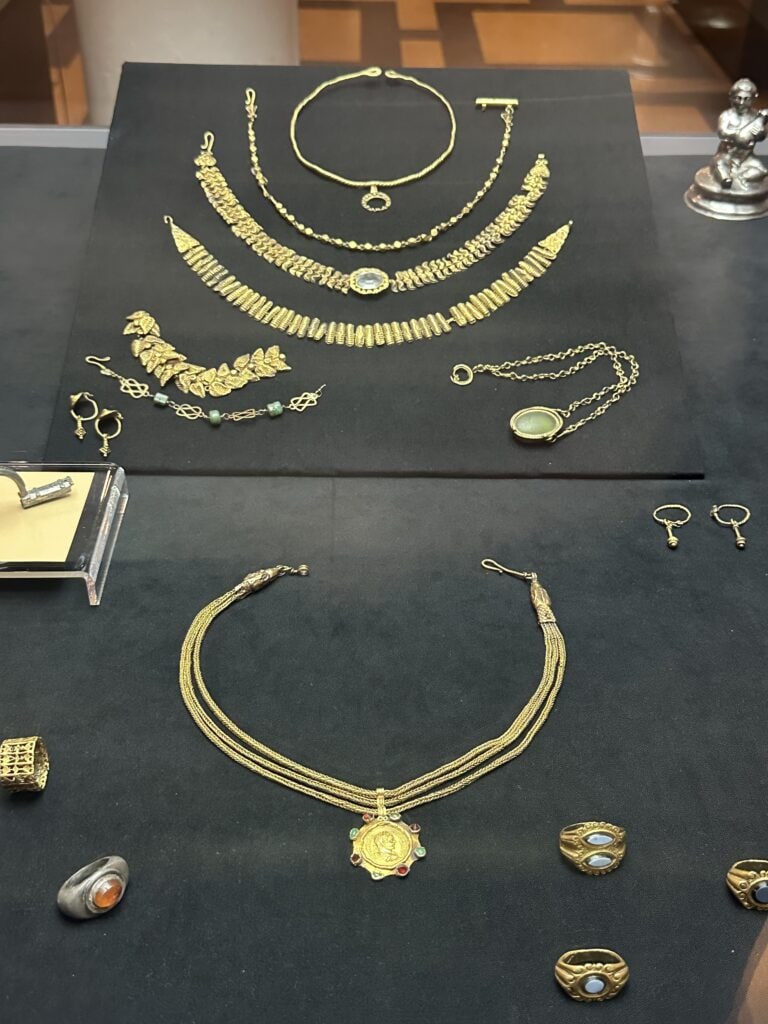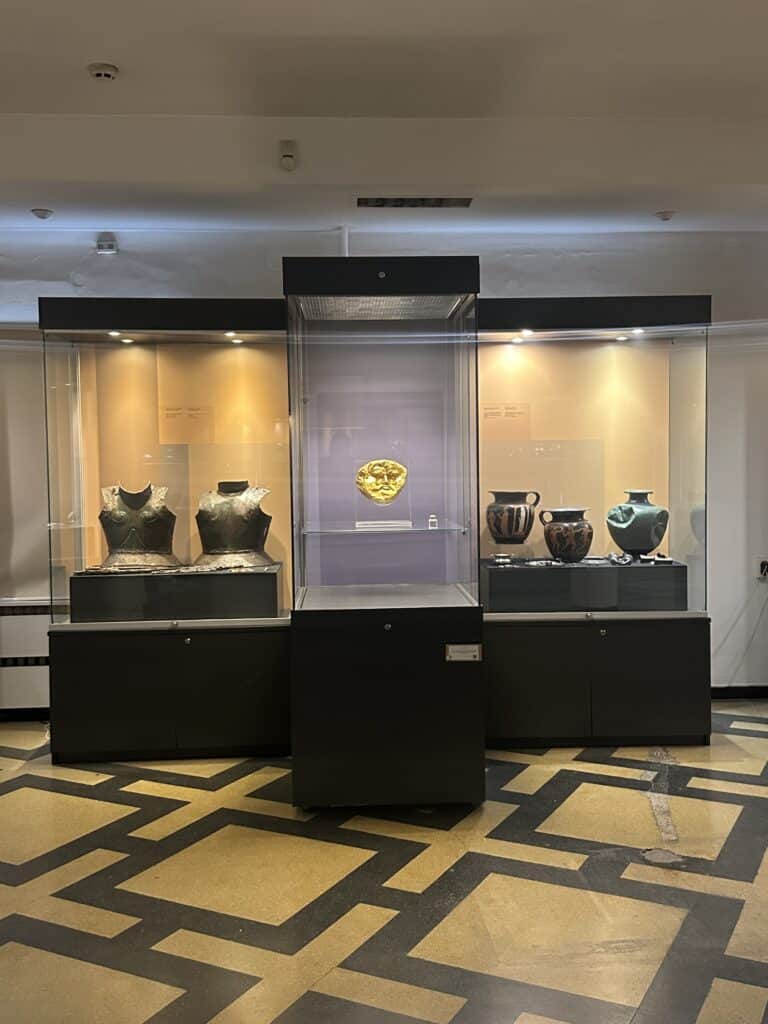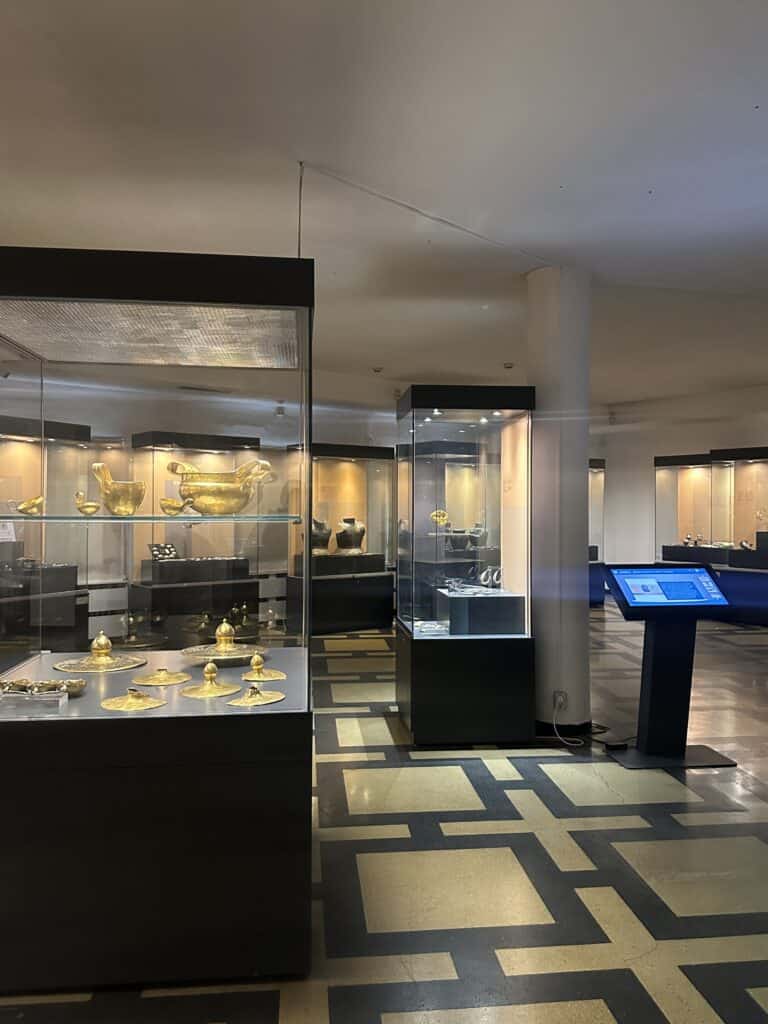
The Treasury Hall is located on the second floor of the eastern wing of the National Archaeological Museum in Sofia (dedicated article).
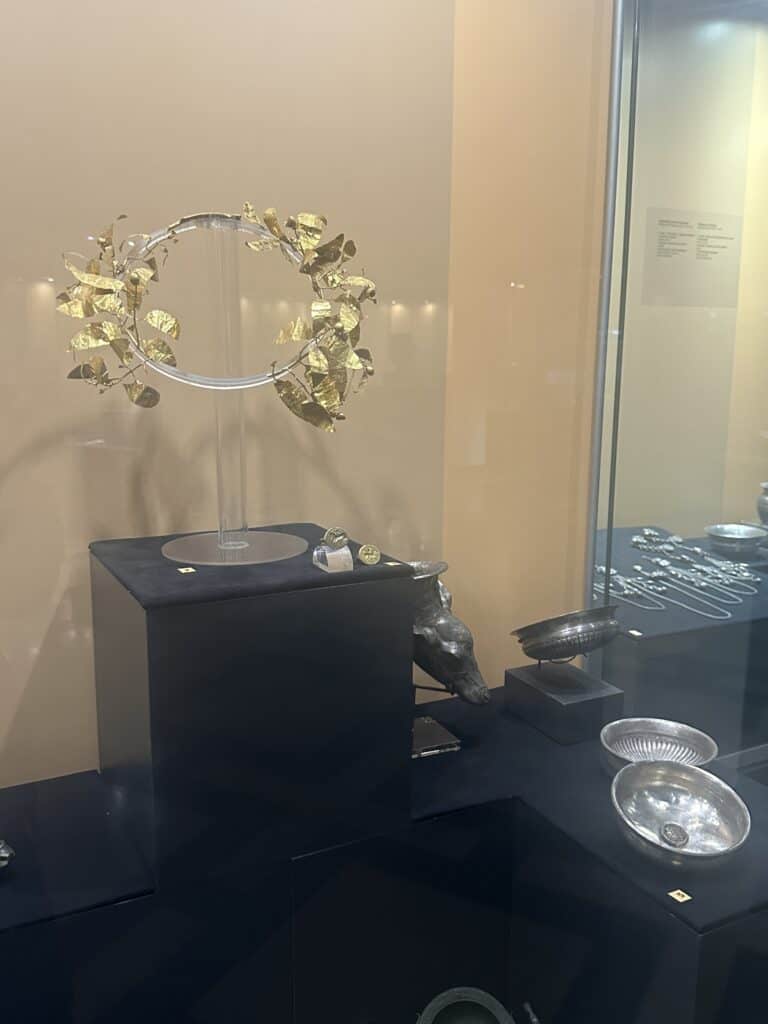
As the most secure and renowned section of the entire institution, this high-security room houses masterpieces of ancient goldsmithing and metalwork.
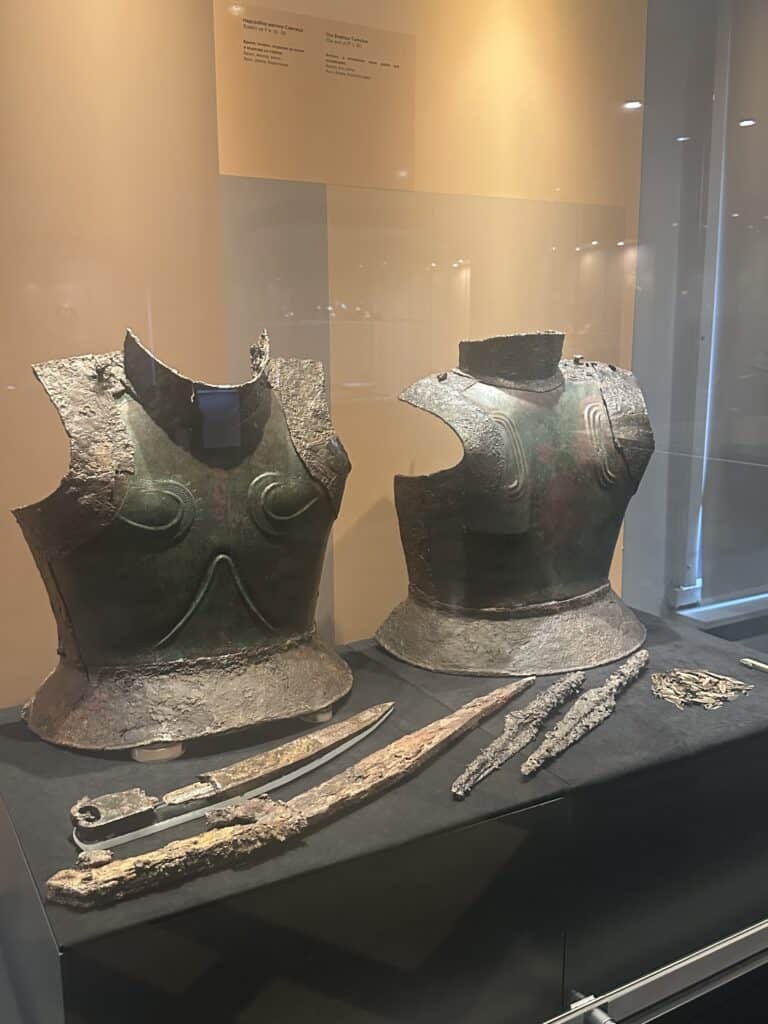
The artifacts kept here trace the history of local populations from the Late Bronze Age through the early Middle Ages.
This hall contains the famous Thracian Treasure.
The Thracians were one of the most fascinating, wealthy, and mysterious peoples of antiquity. They inhabited Southeastern Europe—a territory centered in present-day Bulgaria, but also extending into parts of Greece, Turkey, and Romania—from the Bronze Age (c. 3500 BC – 1500 BC) until the early Middle Ages.
The history of the Thracians came to an end when Thrace was annexed by the Roman Empire, becoming one of its provinces.
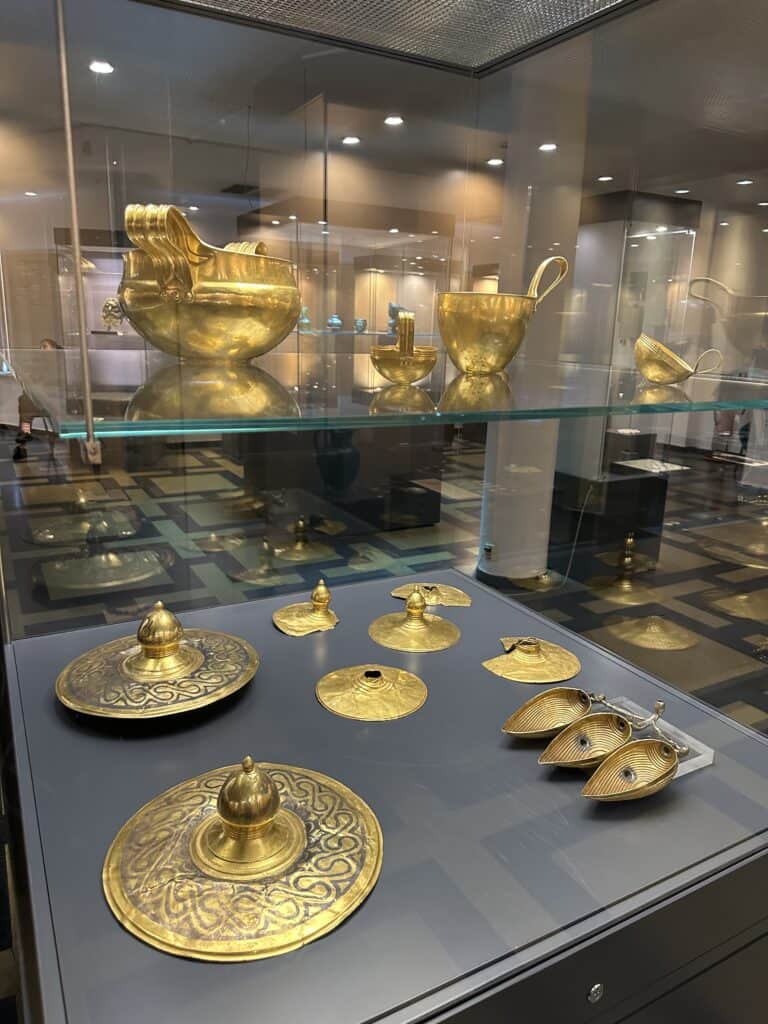
The Valchitran Treasure (14th–12th century BC) consists of 13 objects made of pure gold, with a total weight of approximately 12.5 kg.
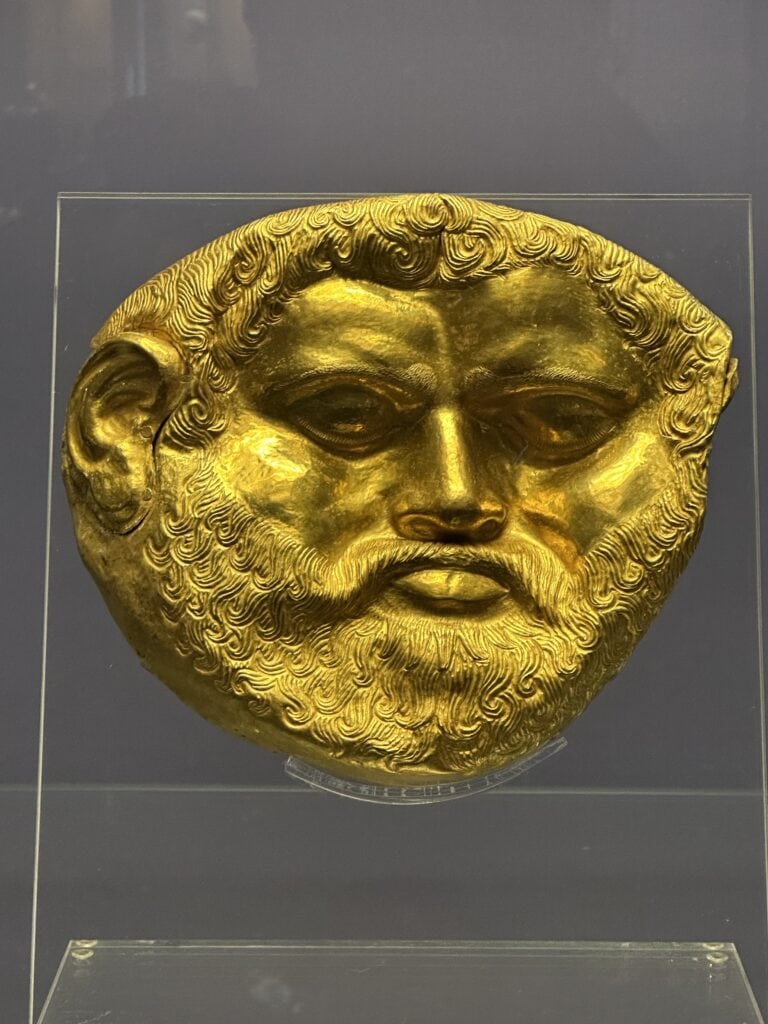
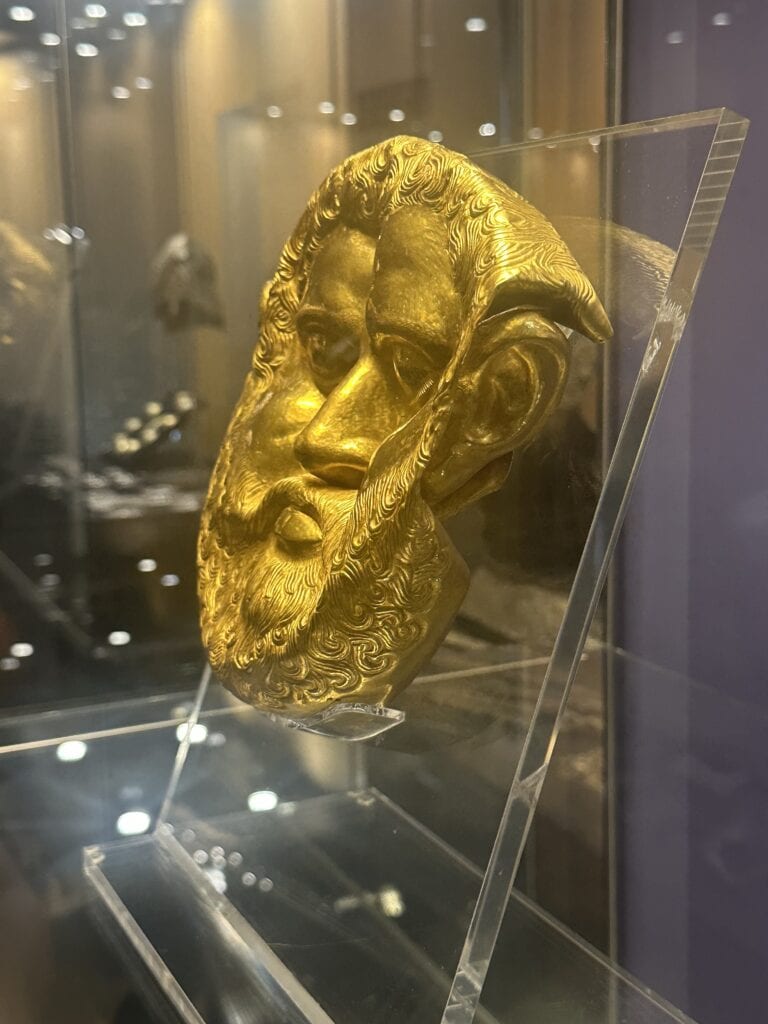
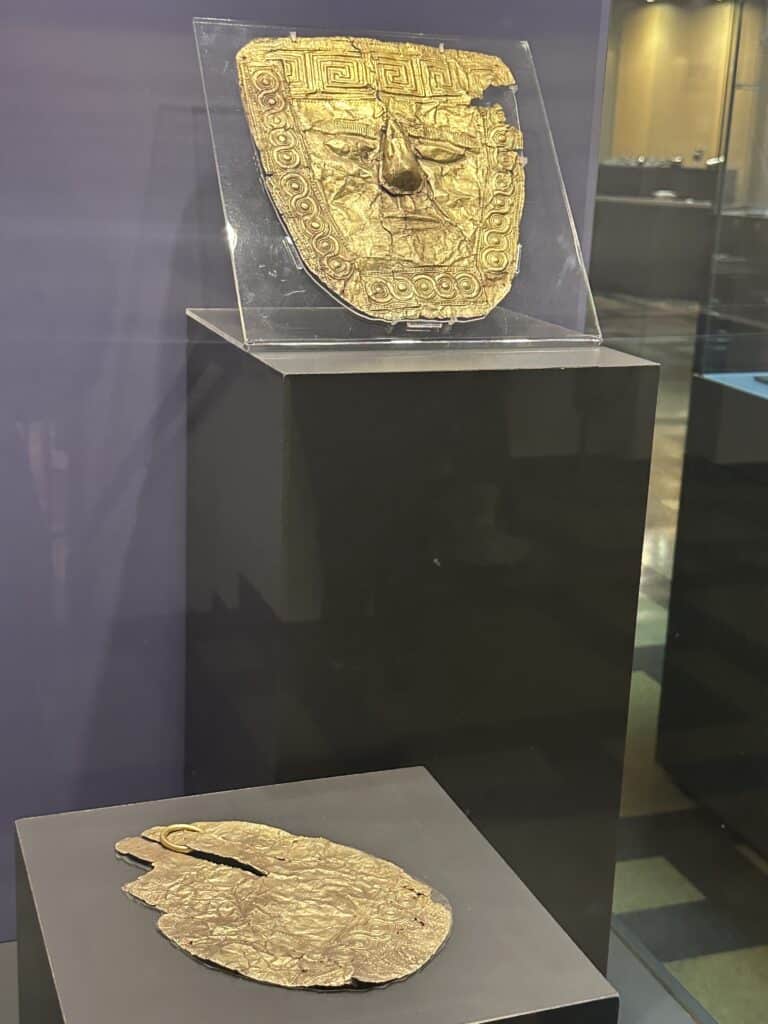
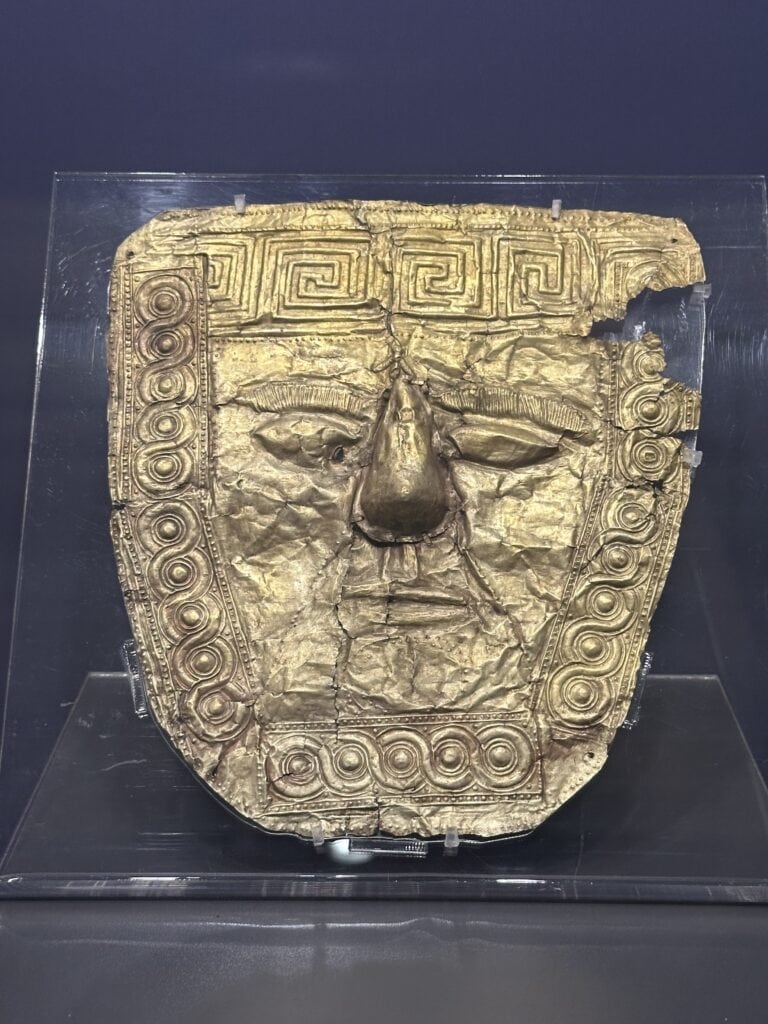
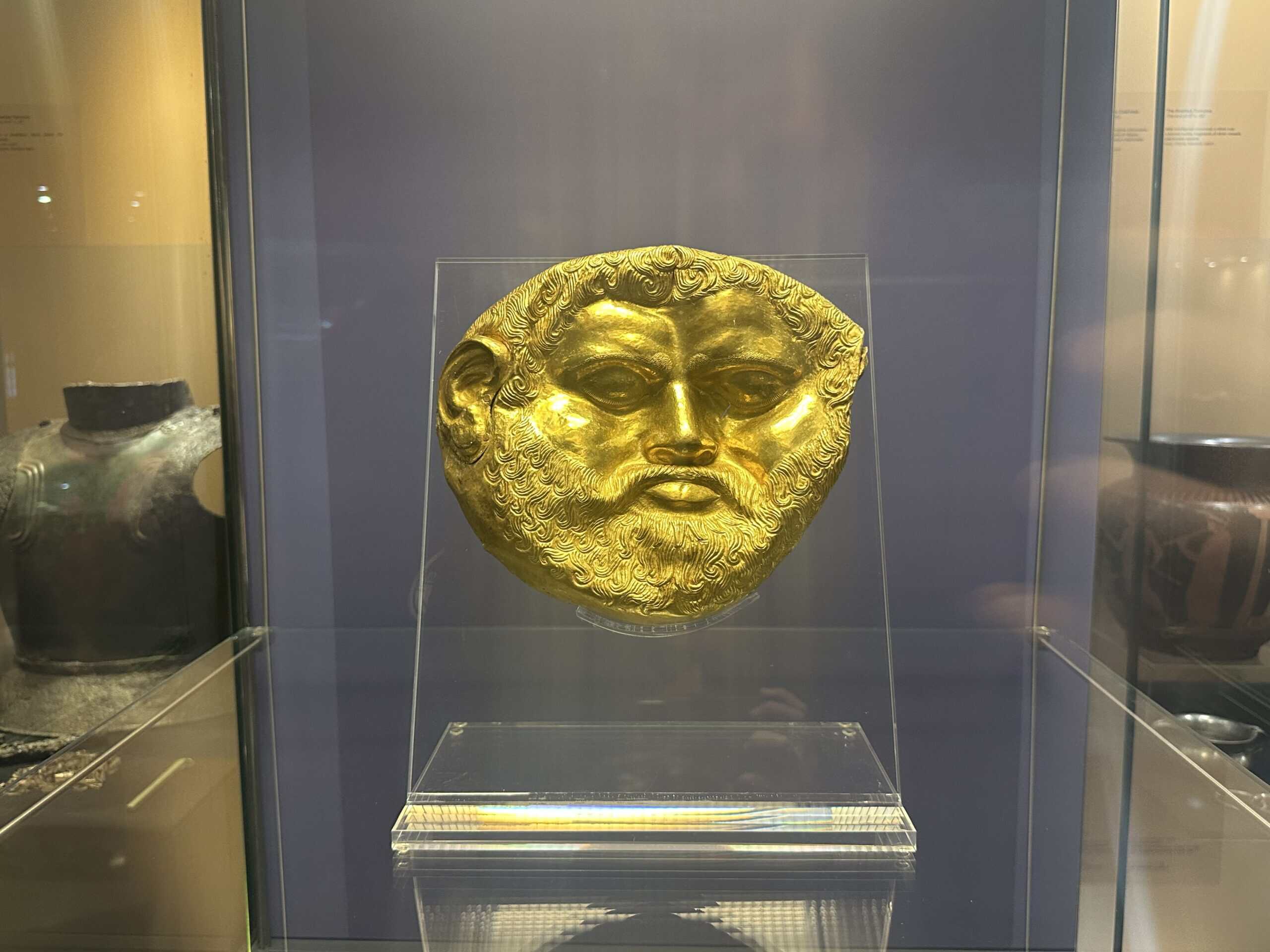
Golden Funerary Mask (4th century BC) was discovered in the Svetitsa burial mound near Shipka. Forged for a Thracian ruler (attributed to King Teres I), this solid gold piece features a highly expressive human face.
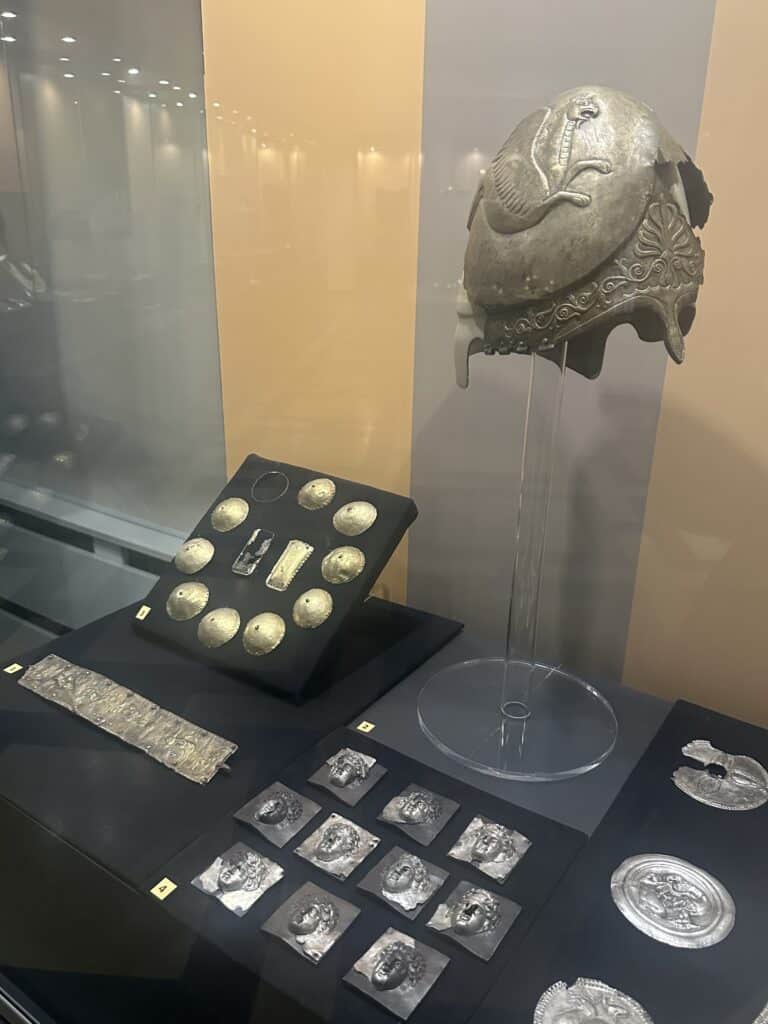
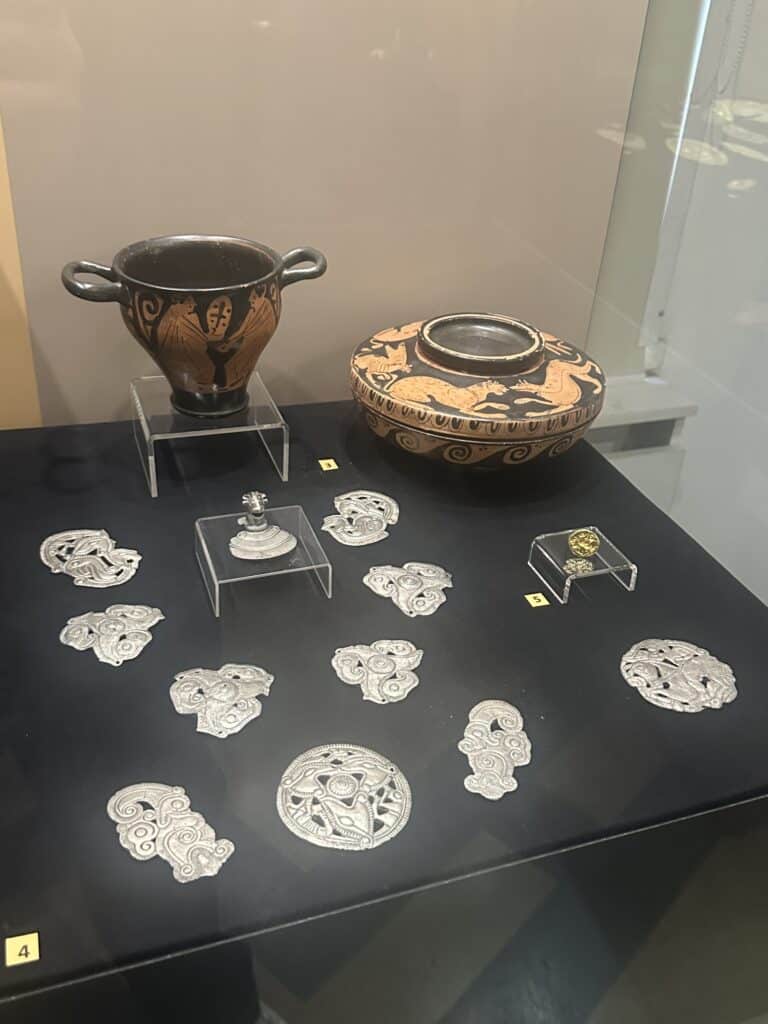
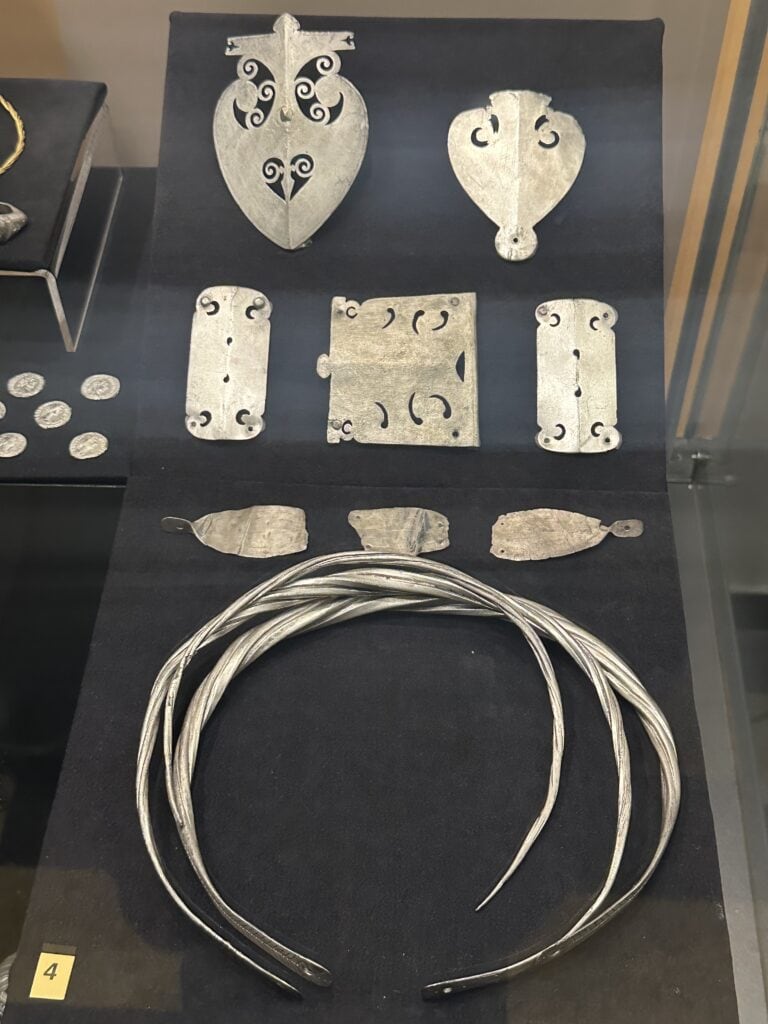
Lukovit Treasure (4th century BC) is an elaborate collection of silver horse trappings, decorated with plaques that depict hunting scenes and mythological motifs from Thracian culture.
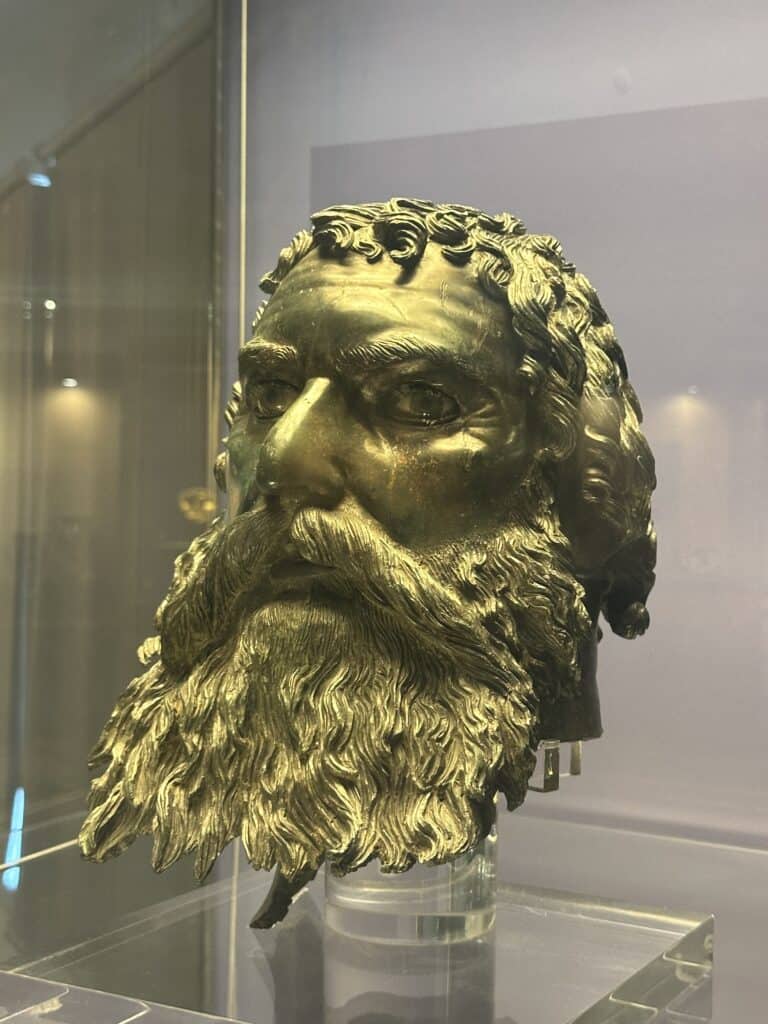
Bronze head of Seuthes III (4th century BC), discovered in the monumental burial mound of Golyama Kosmatka, is a masterpiece of Hellenistic sculpture; it is distinguished by the extraordinary precision of its beard and hair details, as well as its intact glass-paste eyes.
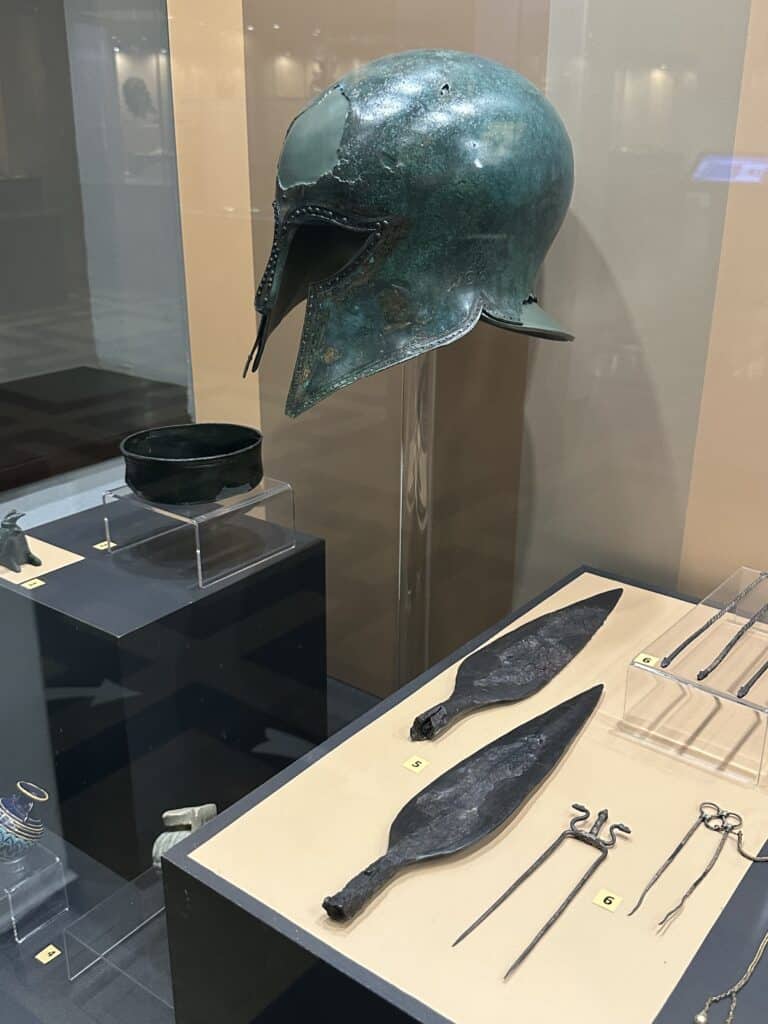
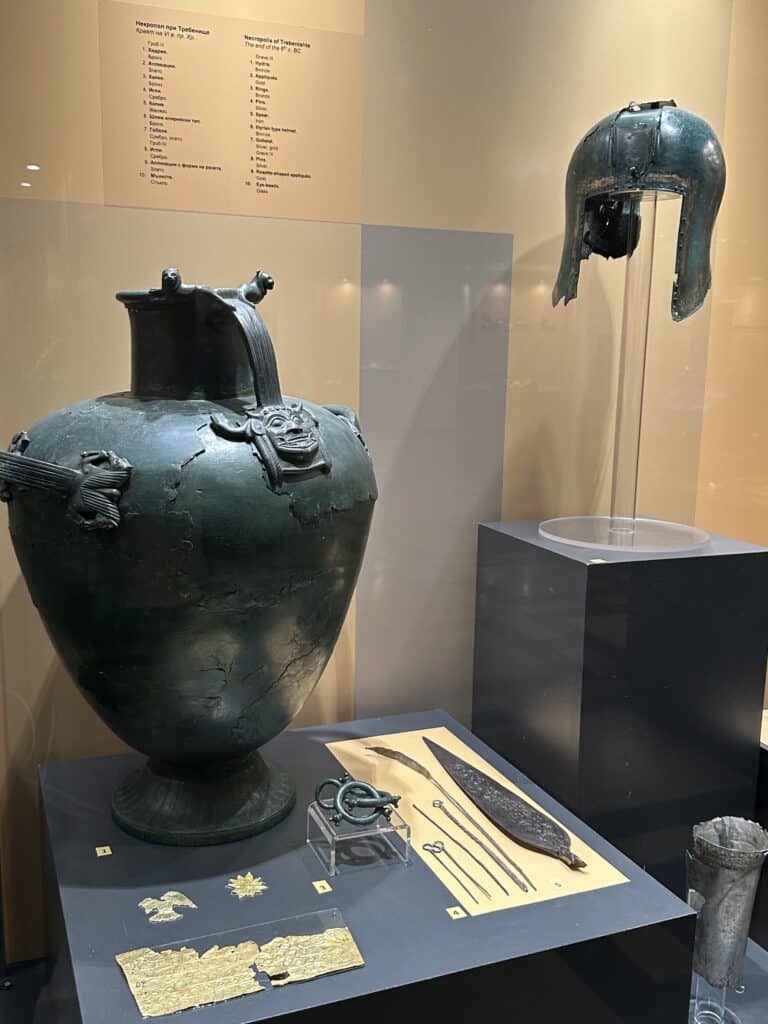
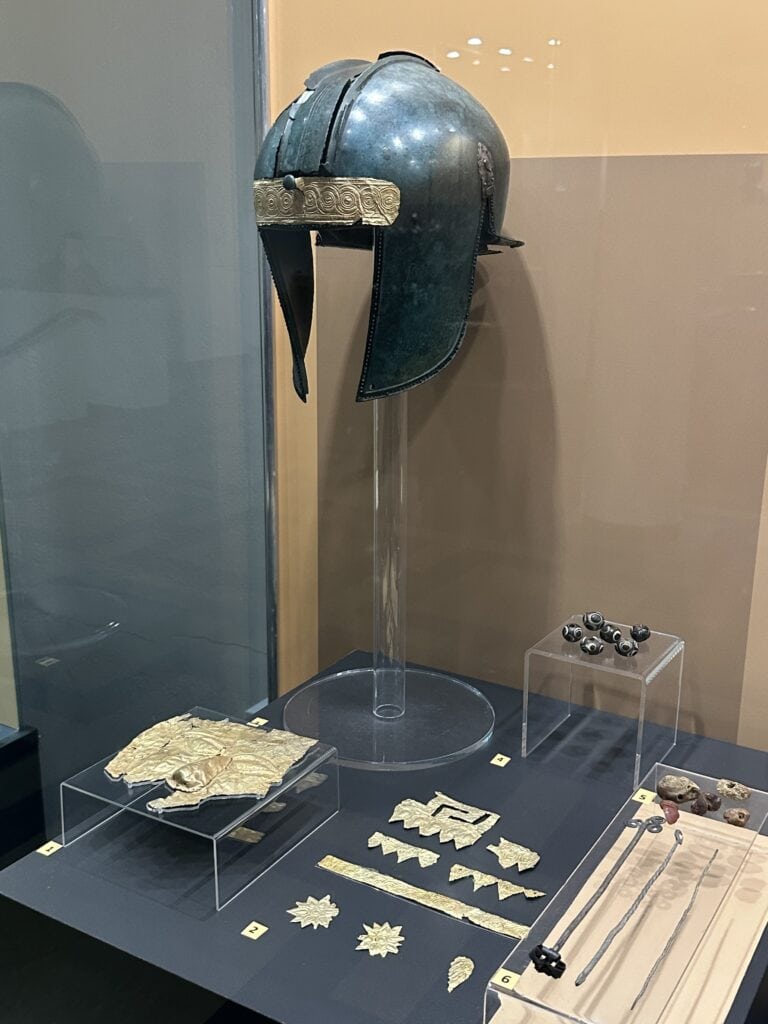
The grave goods from the Trebeništa Necropolis consist of gold ornaments, helmets, and bronze vessels that once belonged to the region’s warrior aristocracy.
The most significant artifact in the Thracian collection—and indeed one of the symbols of Bulgaria—is the Golden Mask of Svetitsa.
It is a unique piece crafted from solid gold, weighing 673 grams; its substantial thickness sets it apart from the simple, thin funerary foils found in Greek contexts. It depicts a male face with a stylized beard and mustache.