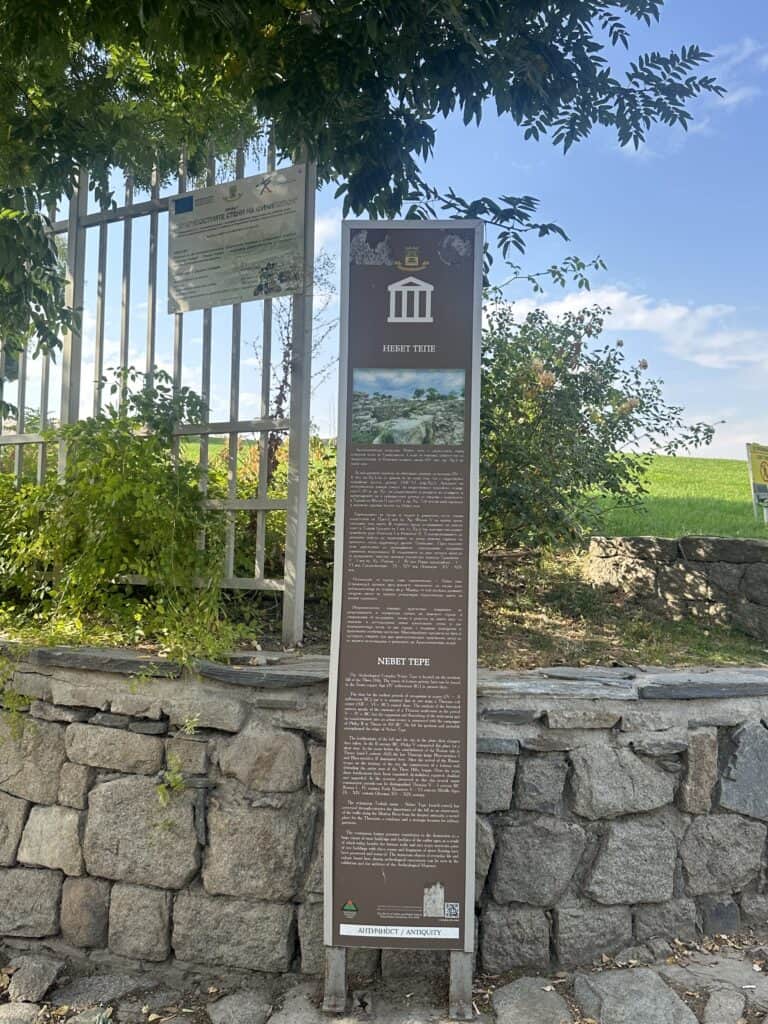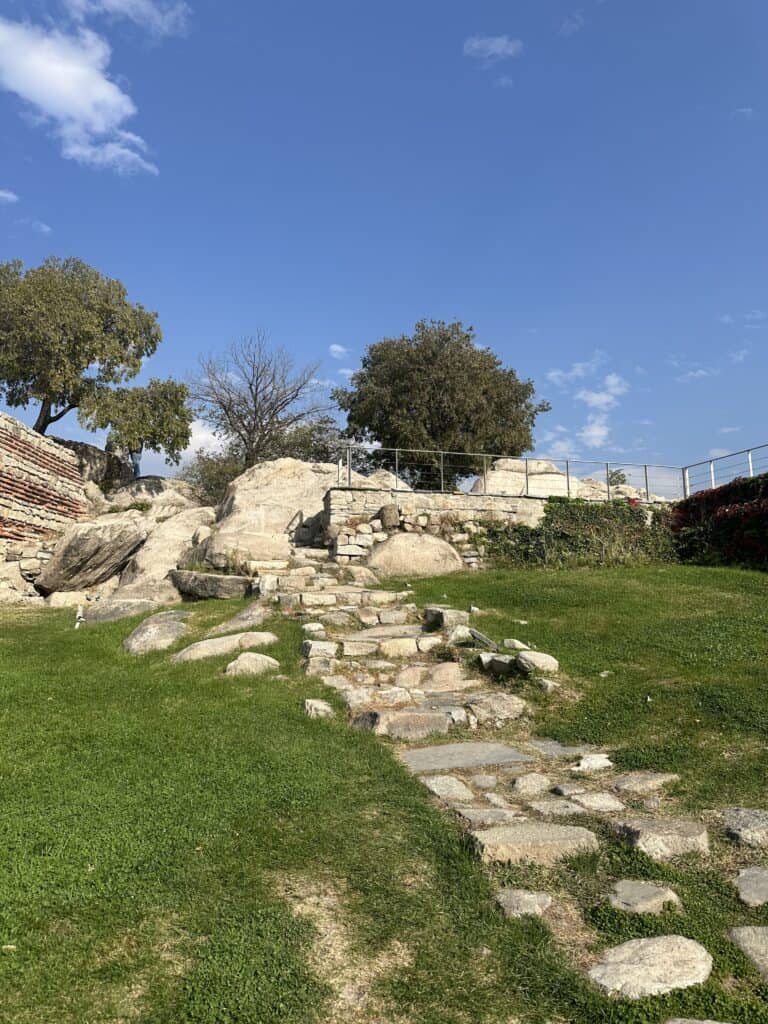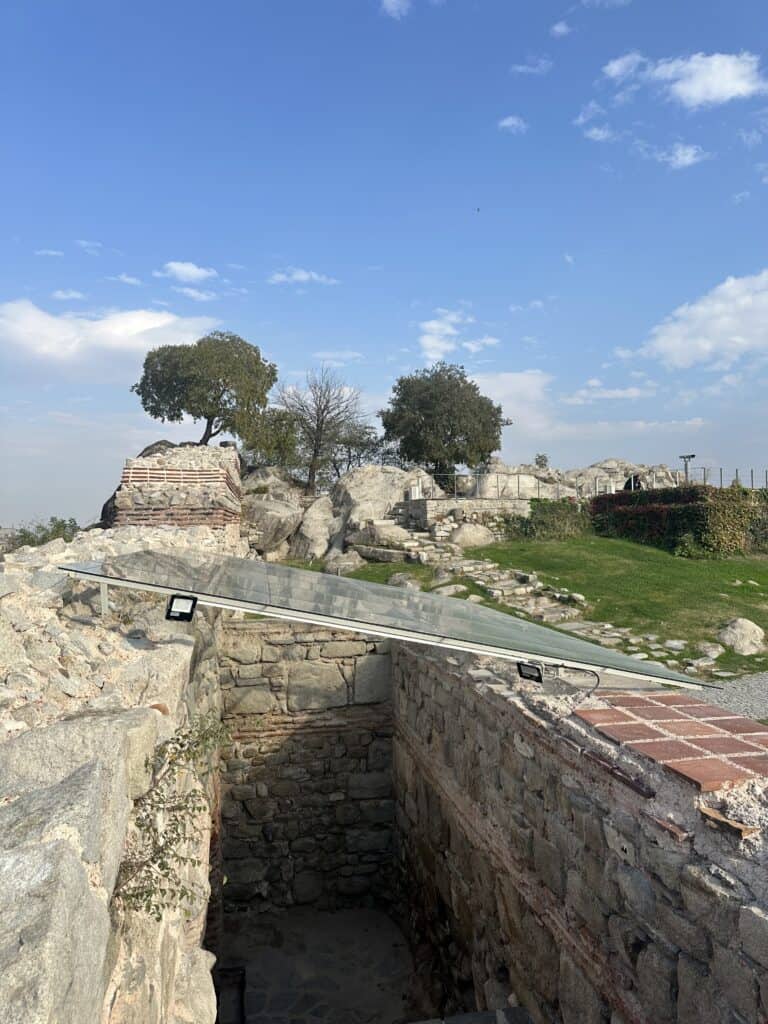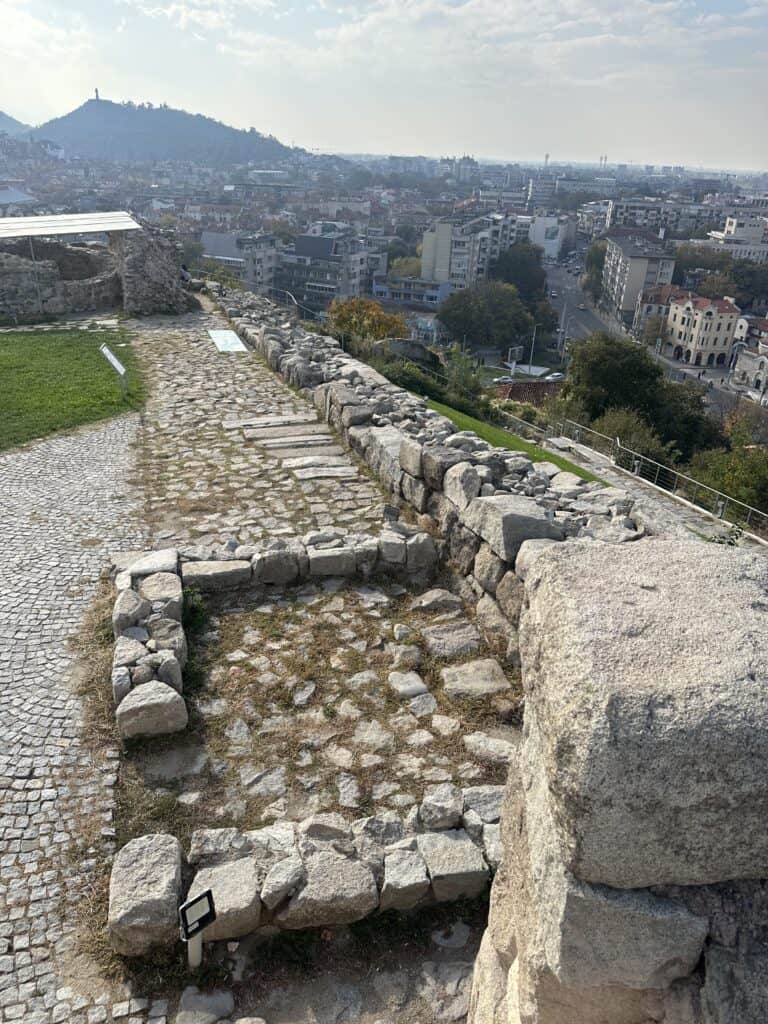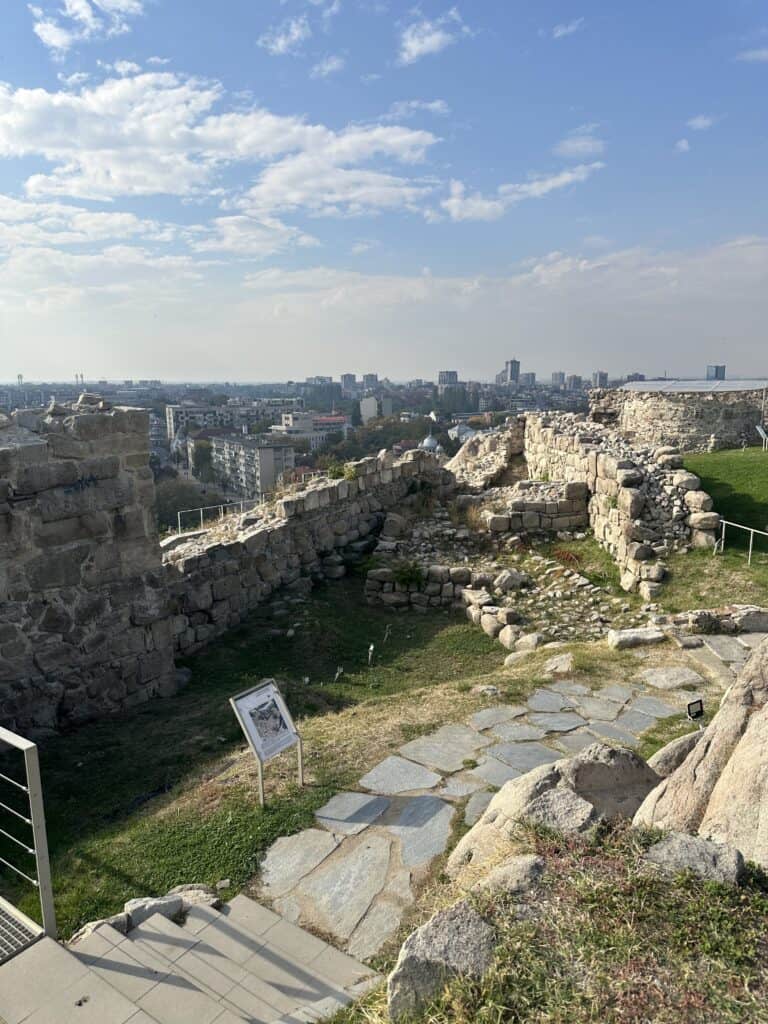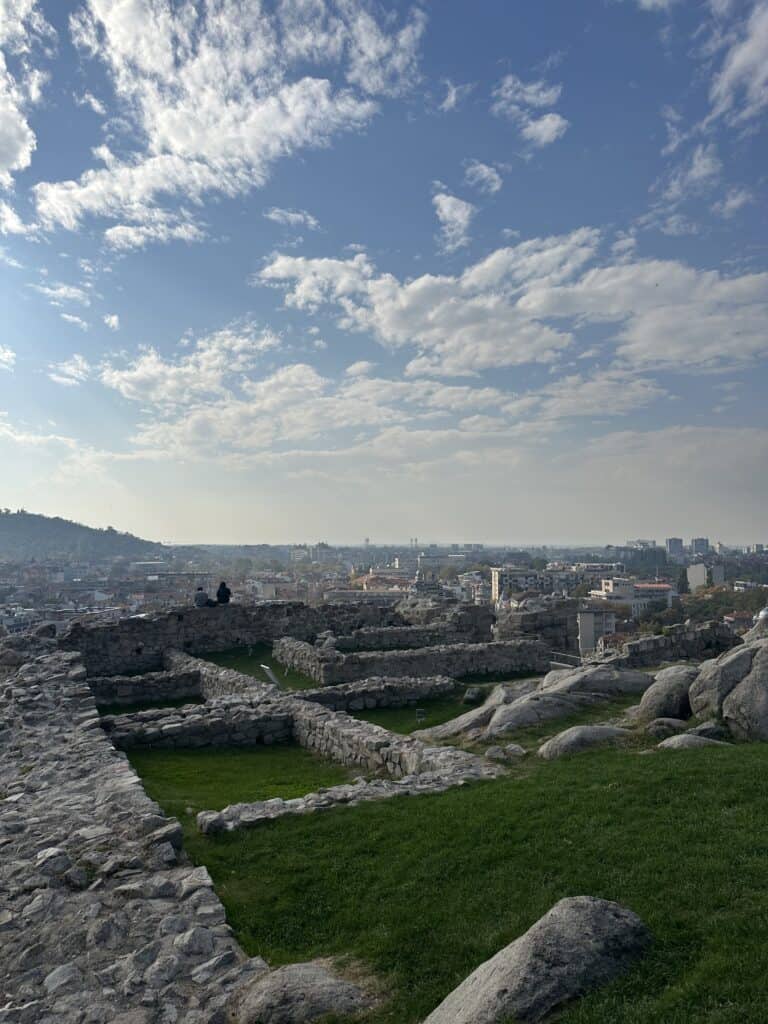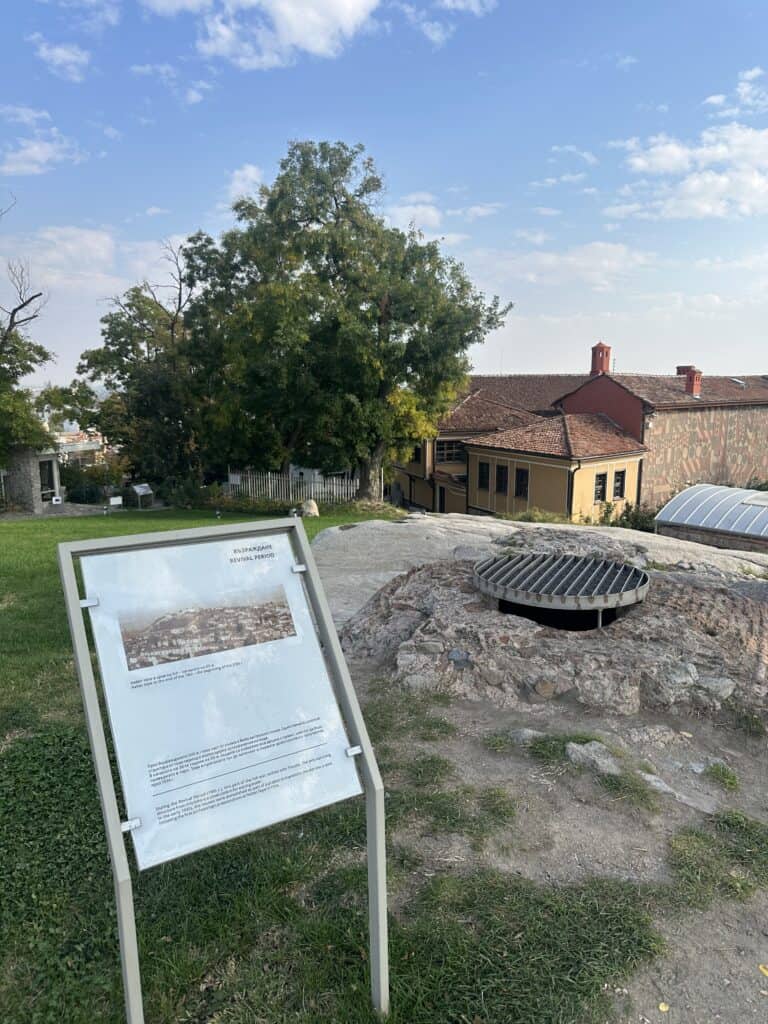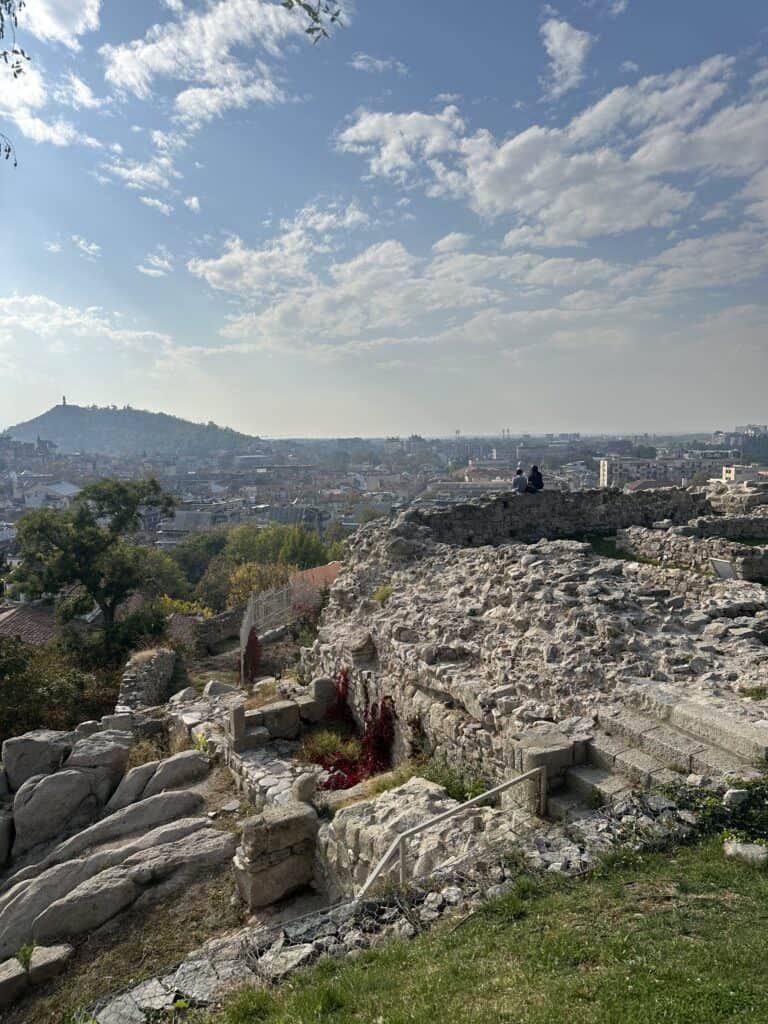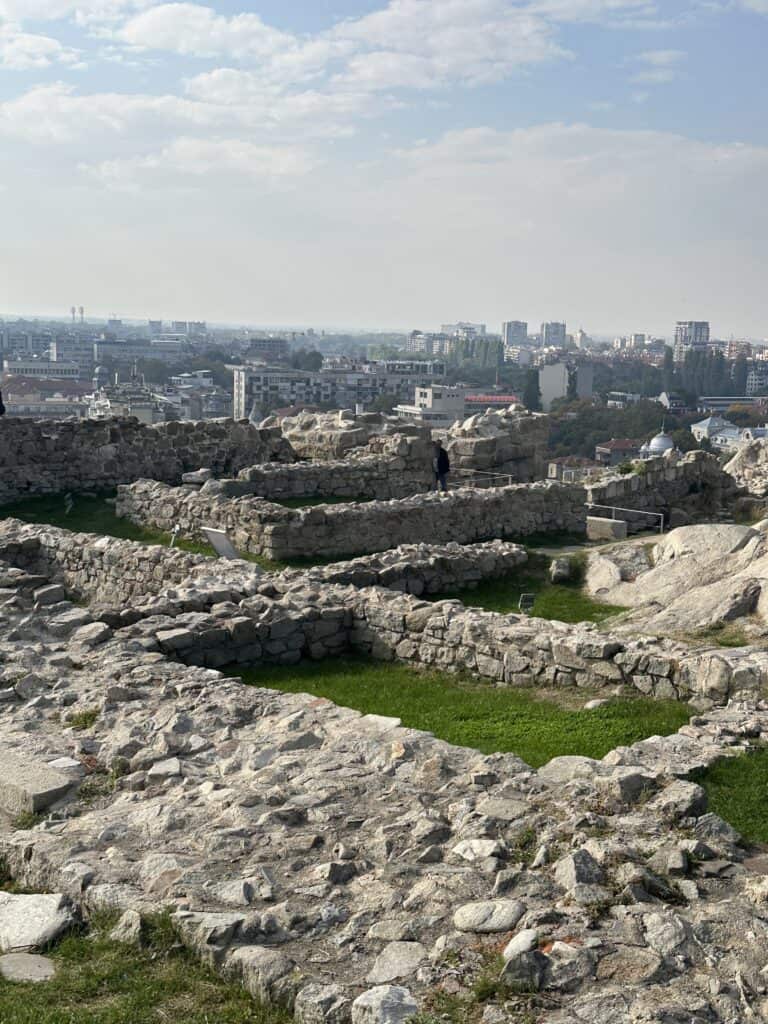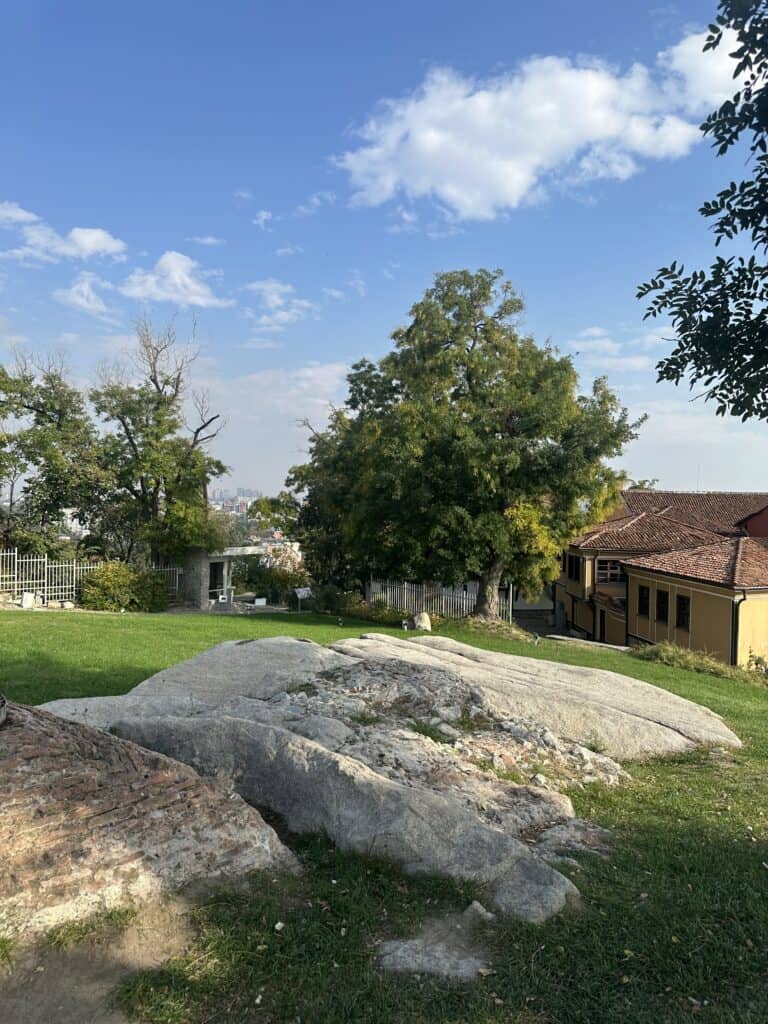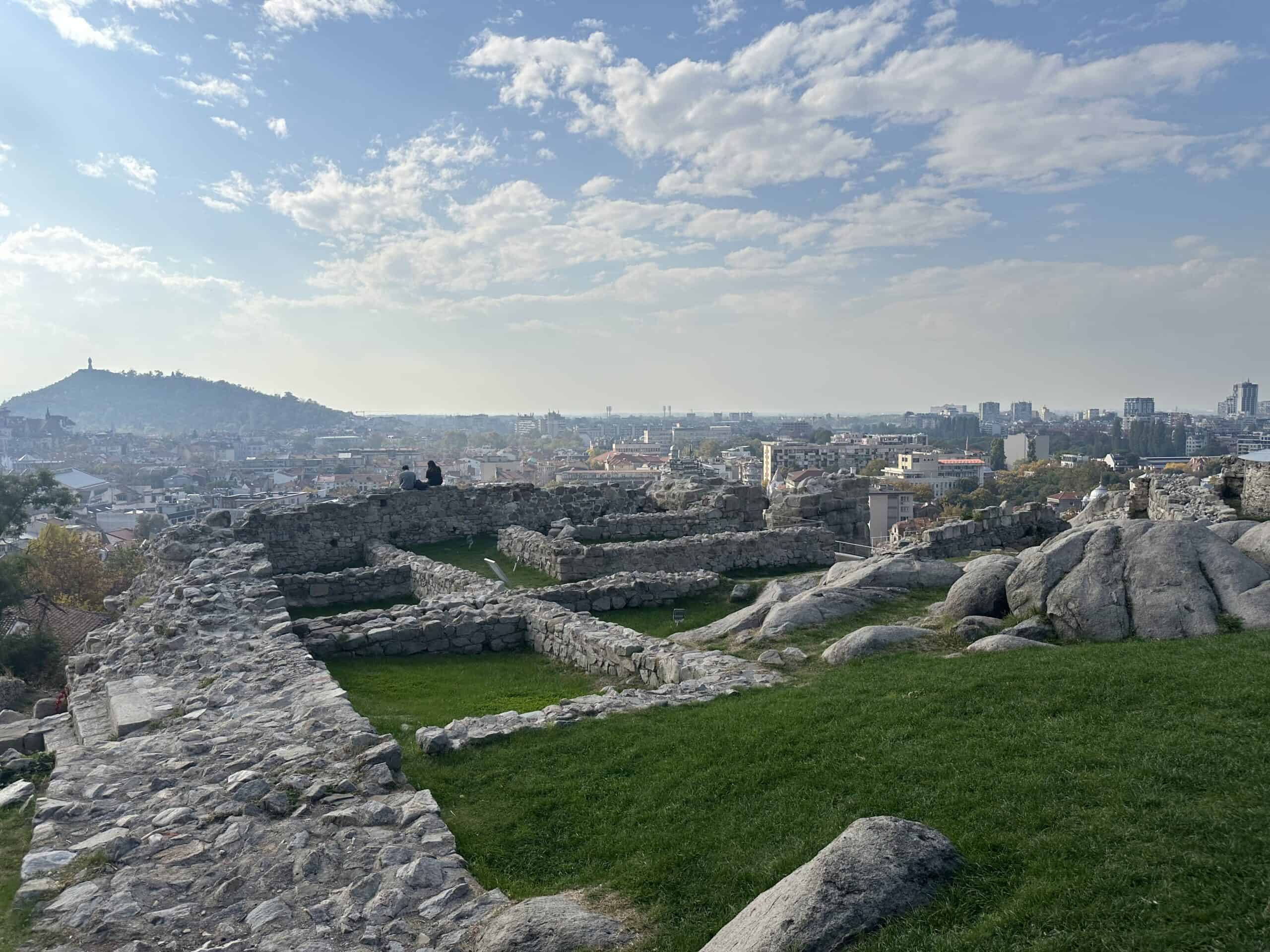
Nebet Tepe is one of the most significant and evocative archaeological sites in Plovdiv.
It is one of the city’s historic hills, upon whose summit the ancient acropolis once stood; it is considered the birthplace of the ancient city.
The earliest human settlements discovered on the hill date back to 4000 BC, making this area one of the oldest continuously inhabited places in Europe.
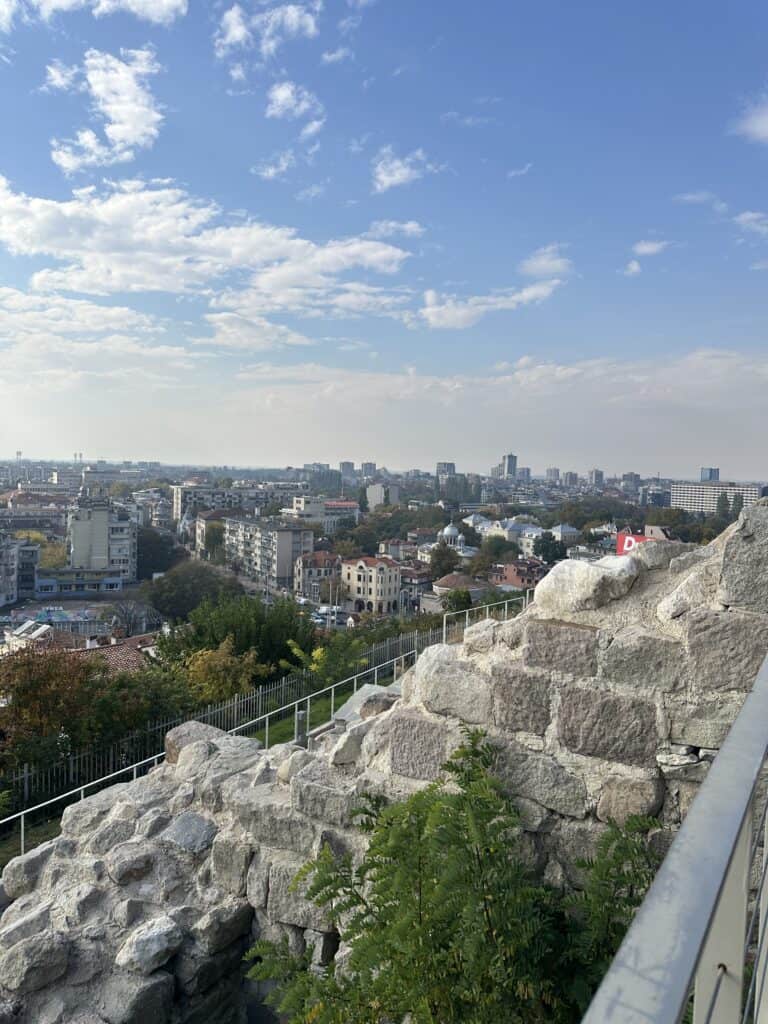
Its modern name derives from the combination of the Turkish words “nevbet” (guard) and “tepe” (hill)—a term used during the Ottoman period, when the hill served as a primary military lookout point.
The first permanent settlements on the hill date to the Copper Age (circa 4000 BC). Later, during the Bronze and Iron Ages, the Thracians chose this strategic hill for its commanding position over the Maritsa River and the surrounding plain.
The settlement grew into a full-fledged fortified city known as Eumolpias (named after the mythical Thracian king Eumolpus).
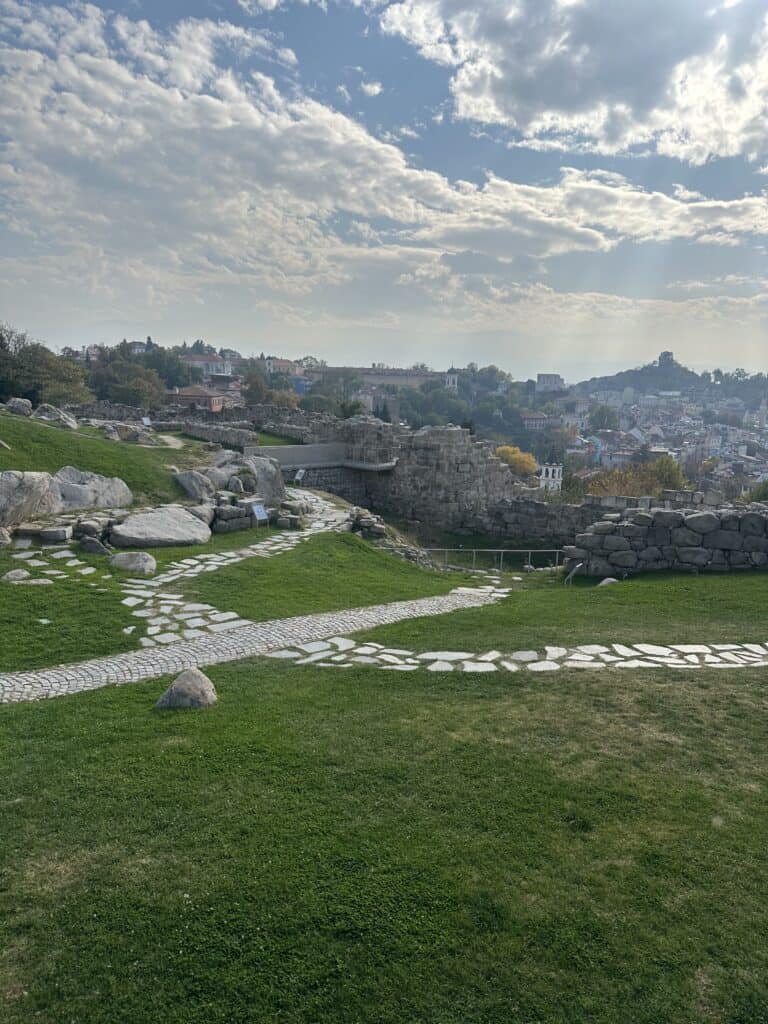
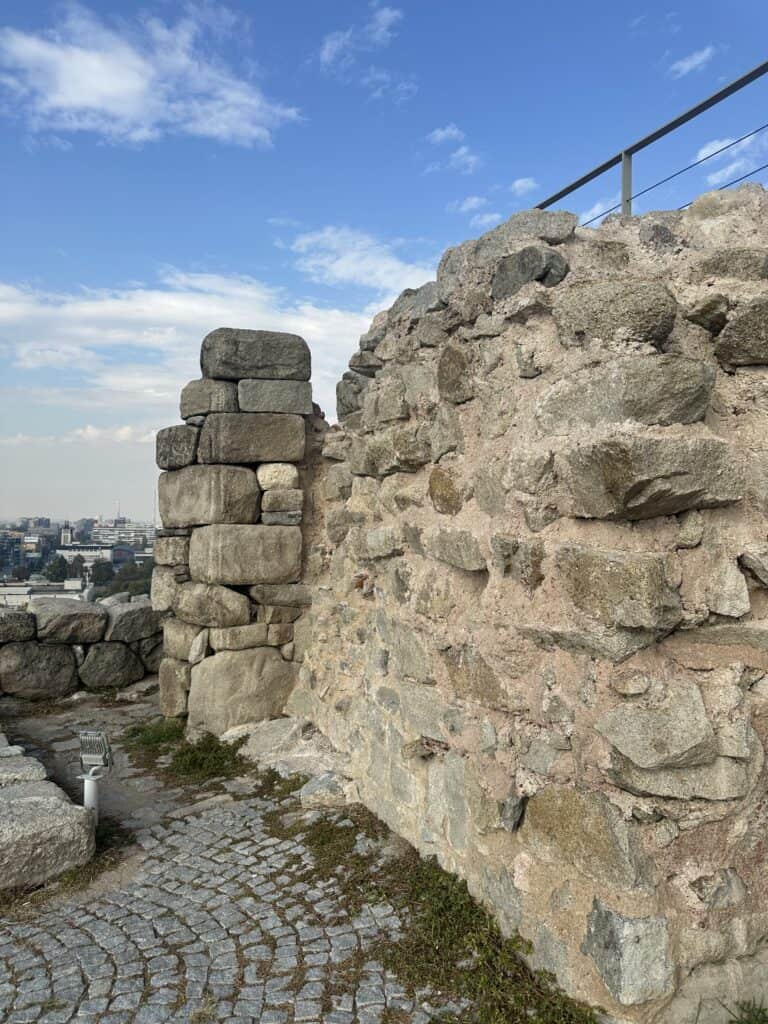
From this historical period, the characteristic Cyclopean walls remain—constructed without the use of mortar, by fitting together massive blocks of granite.
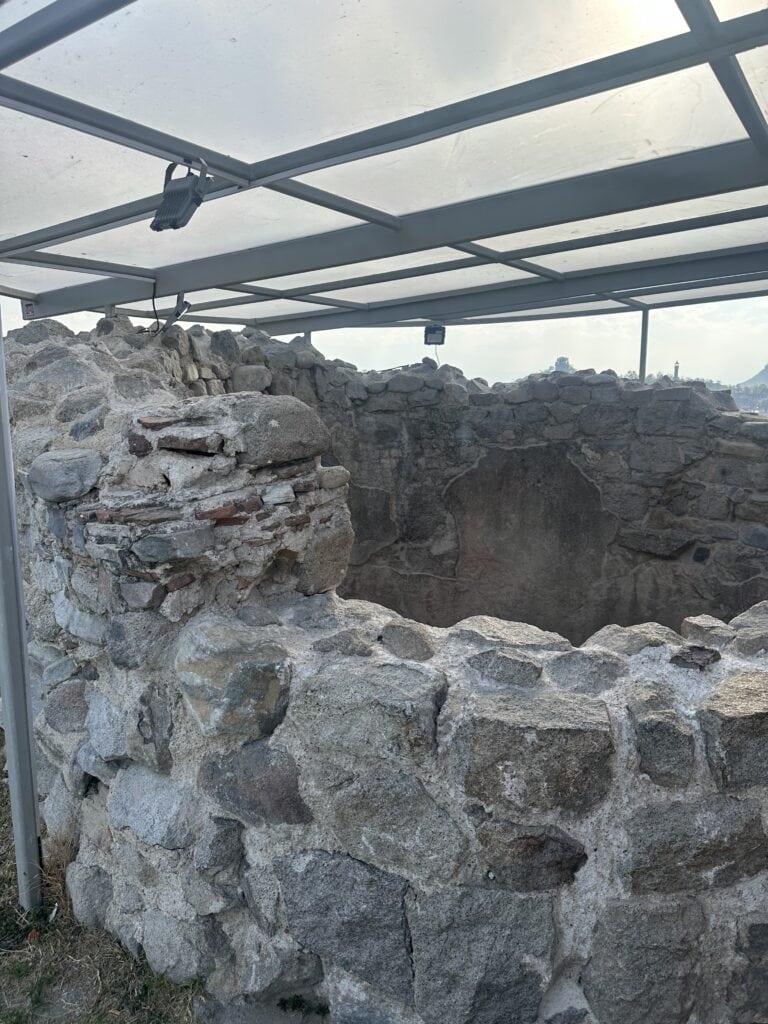
In the 20th century, the site was transformed into an open-air museum. Between 2023 and 2024, the Nebet Tepe archaeological complex underwent a major restoration and architectural enhancement project, aimed at stabilizing the historical remains and making the walking paths and viewpoints even more accessible to international visitors.