Vienna Prater is one of the largest and most famous public amusement parks in the world, located in the Austrian capital.
Its history dates back to the Middle Ages, when in 1560 Emperor Maximilian II of Habsburg purchased the land in the Danube River area. He transformed the area into a private hunting reserve for the exclusive use of the Viennese aristocracy, prohibiting access to ordinary citizens to combat poaching.
In 1766, Emperor Joseph II opened the Prater to the public, donating it to the Viennese as a recreational area.
The Prater hosted the Vienna World’s Fair in 1873.
Admission to the entire park is completely free and open year-round.
It is mainly divided into two distinct areas: the Wurstelprater, the famous and historic amusement park with over 250 attractions, and the Green Prater, a natural oasis covering approximately 6 km².
The Green Prater is a natural park almost twice the size of Central Park in New York. It is crossed by the Hauptallee, a 4.5-kilometer-long tree-lined avenue closed to cars, popular with joggers, cyclists, and skaters.
The Wurstelprater, on the other hand, features roller coasters and traditional carousels. Each attraction is paid for individually, with prices generally ranging from €1 to €15.
Among the main attractions are the Giant Ferris Wheel, the Prater Tower (a 117-meter-high carousel), the Lusthaus (a former imperial hunting lodge, now converted into a restaurant and café), and Madame Tussauds.
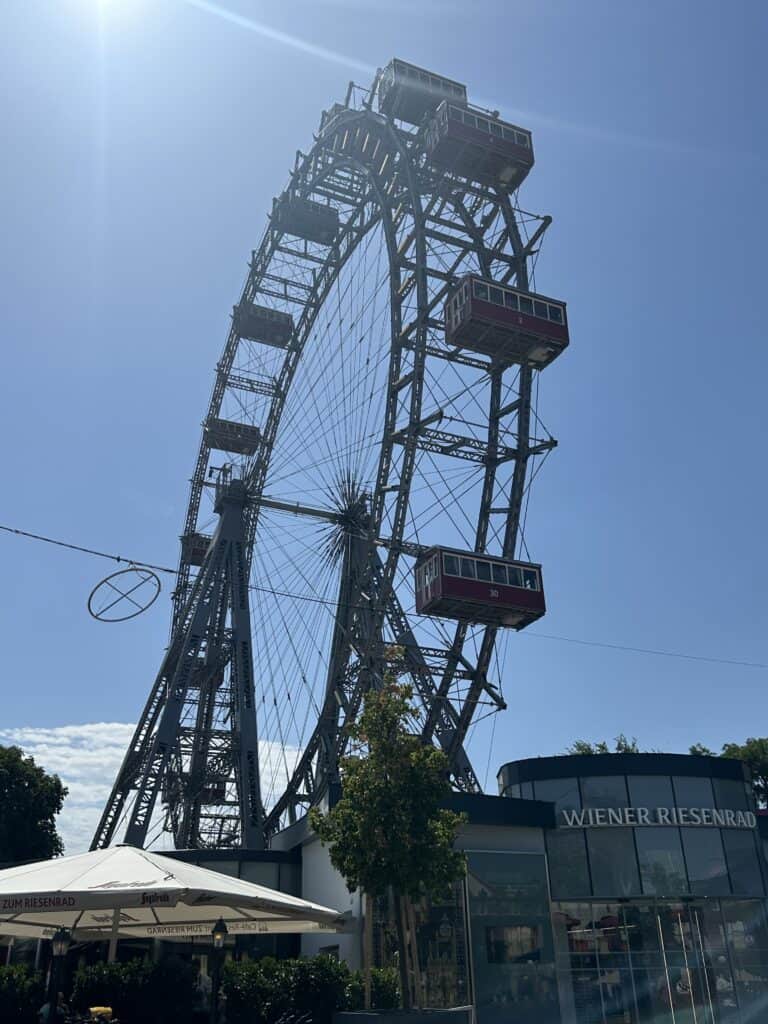
The Vienna Giant Ferris Wheel (Wiener Riesenrad) is the oldest continuously operating Ferris wheel in the world and is one of the symbols of Vienna.
It was built in 1897 to celebrate the 50th anniversary of the reign of Emperor Franz Joseph I.
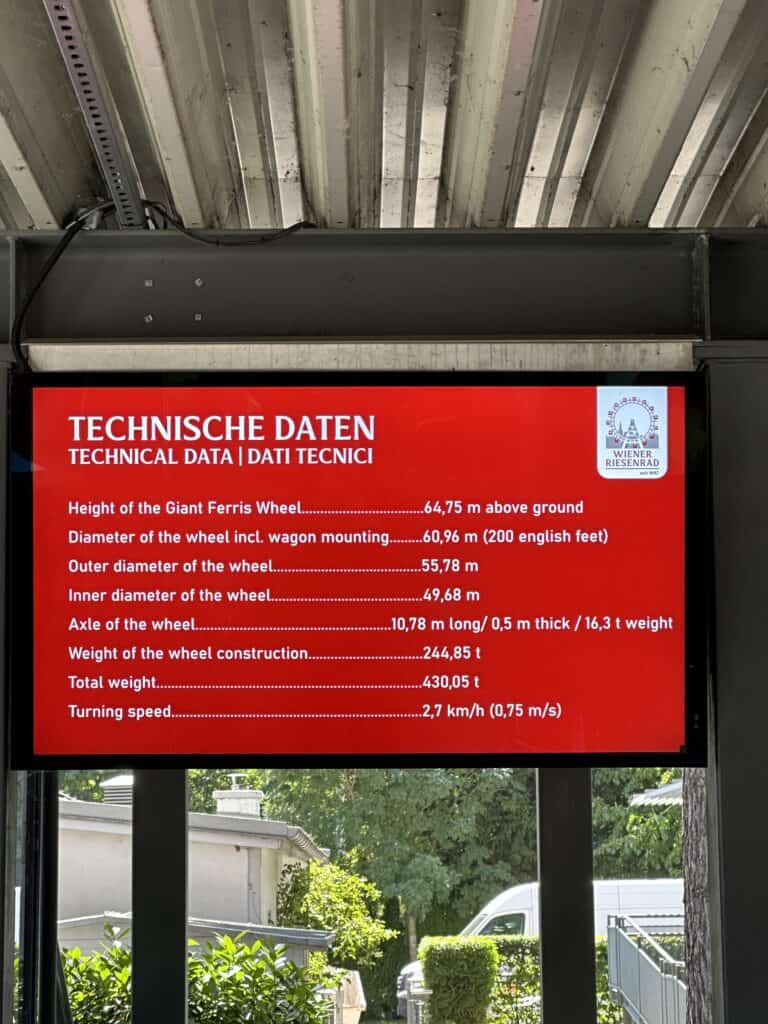
At 64.75 meters tall, it was the tallest Ferris wheel in the world and became a symbol of cutting-edge technology in the late 19th century.
In 1944, during World War II, a devastating fire caused by bombing completely burned down all the wooden cabins, leaving only the steel frame.
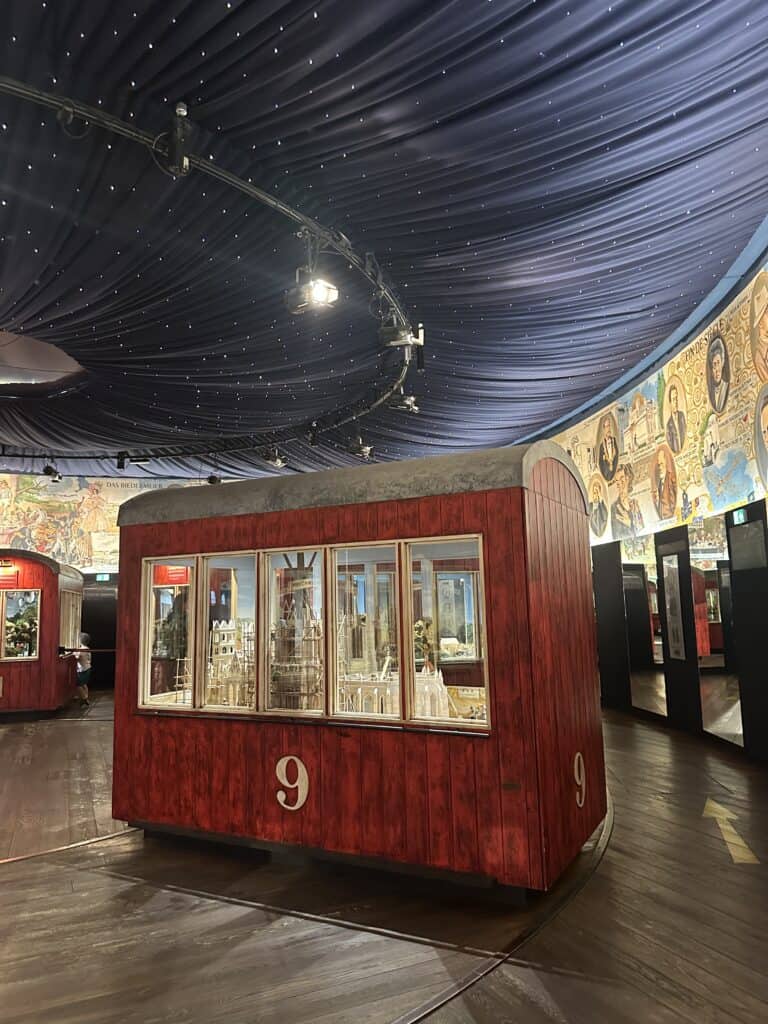
When it returned to operation in 1947, for safety and budget reasons, only 15 cabins were installed instead of the original 30.
A full panoramic tour lasts about 15 minutes and is accessible free of charge with the Vienna Pass.
Another interesting feature of the Prater is the Kugelmugel Republic.
Kugelmugel Republic is one of the most famous and curious micronations in the world, located within the Prater.
The history of this micronation began in the early 1970s when Austrian artist Edwin Lipburger (the founder) designed and built a bizarre spherical wooden structure.
The house was built without planning permission in Katzelsdorf, Lower Austria. In 1976, to defend his artwork, Lipburger unilaterally declared the independence of the “Republic of Kugelmugel.” The artist began refusing to pay Austrian state taxes and was sentenced to 10 weeks in prison, but was pardoned by the Austrian President.
In 1980, the structure was dismantled and moved to the Prater, where it remains today, surrounded by a symbolic barbed wire fence.