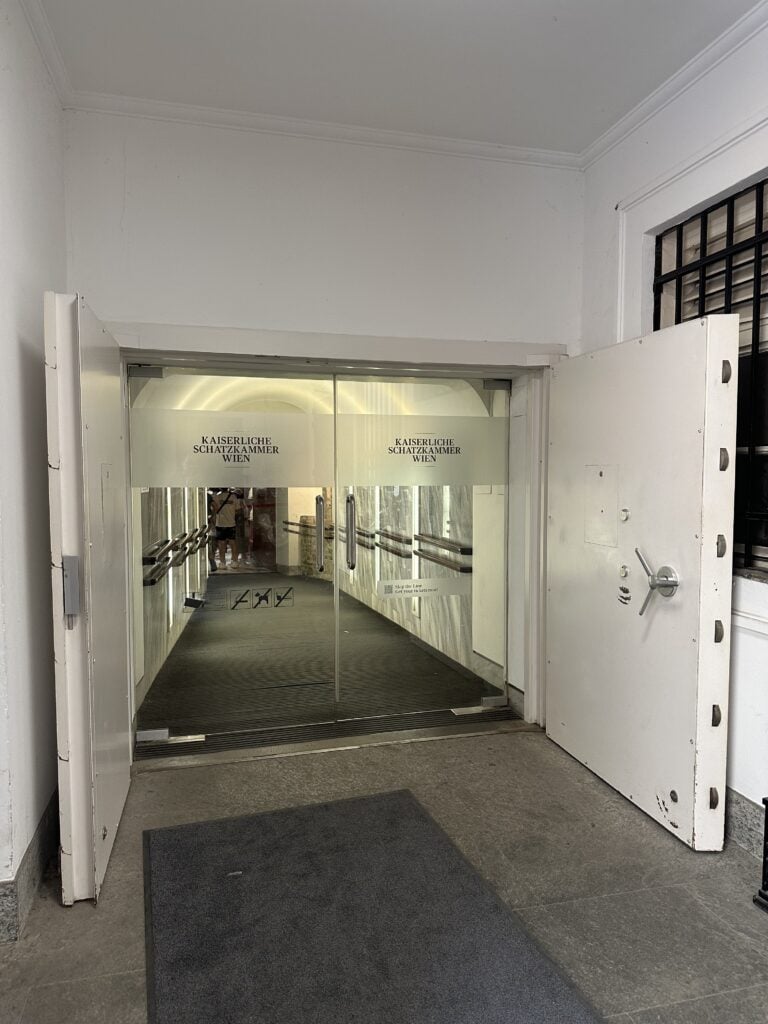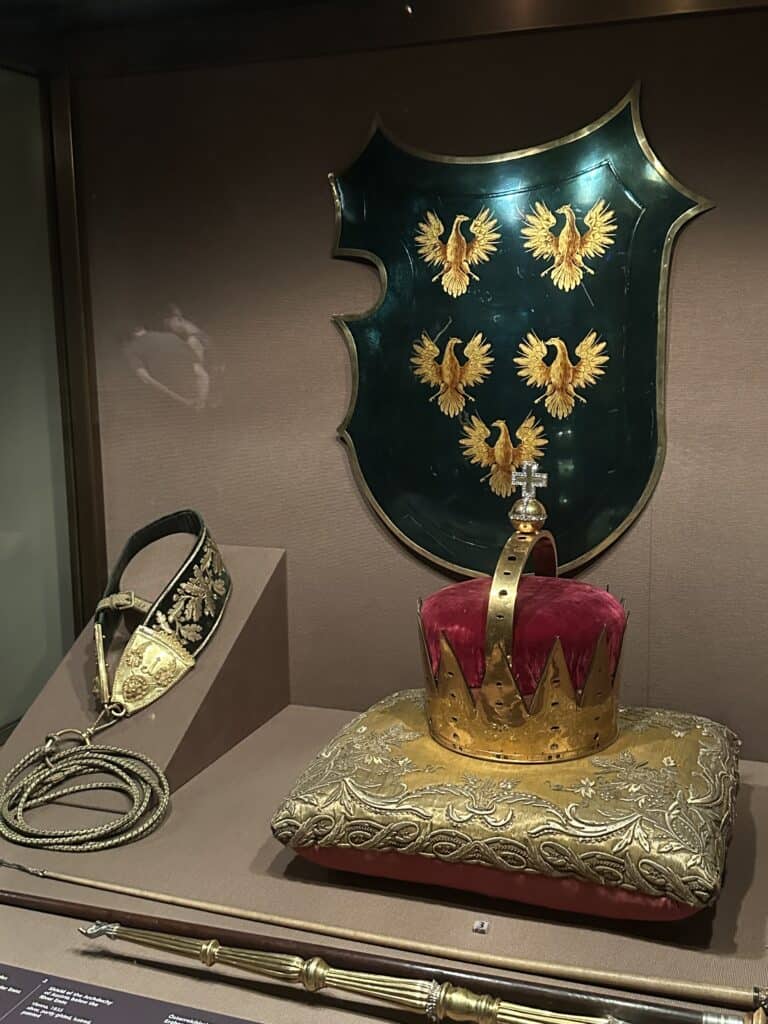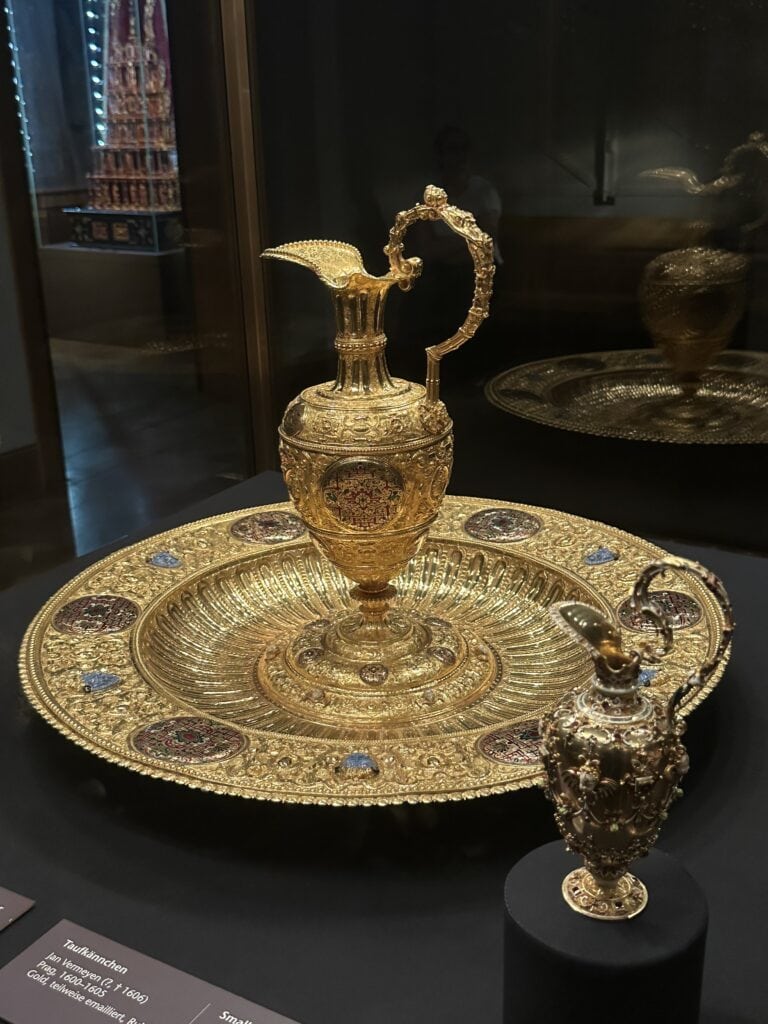
The Imperial Treasury of Vienna (known in German as the Kaiserliche Schatzkammer) is considered one of the most important and valuable collections of state jewels in the world.
Located inside the Hofburg Palace, it preserves over a thousand years of European history through symbols of the power of the Habsburg dynasty and the Holy Roman Empire.
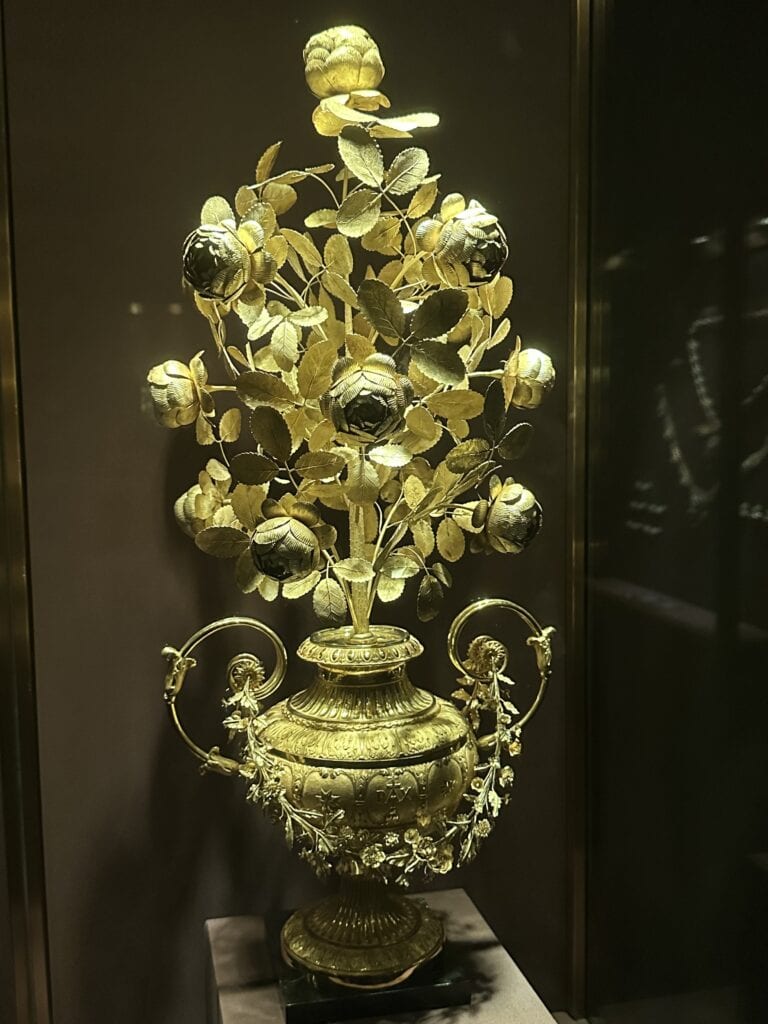
The collection is divided into several rooms, and the most important exhibits are:
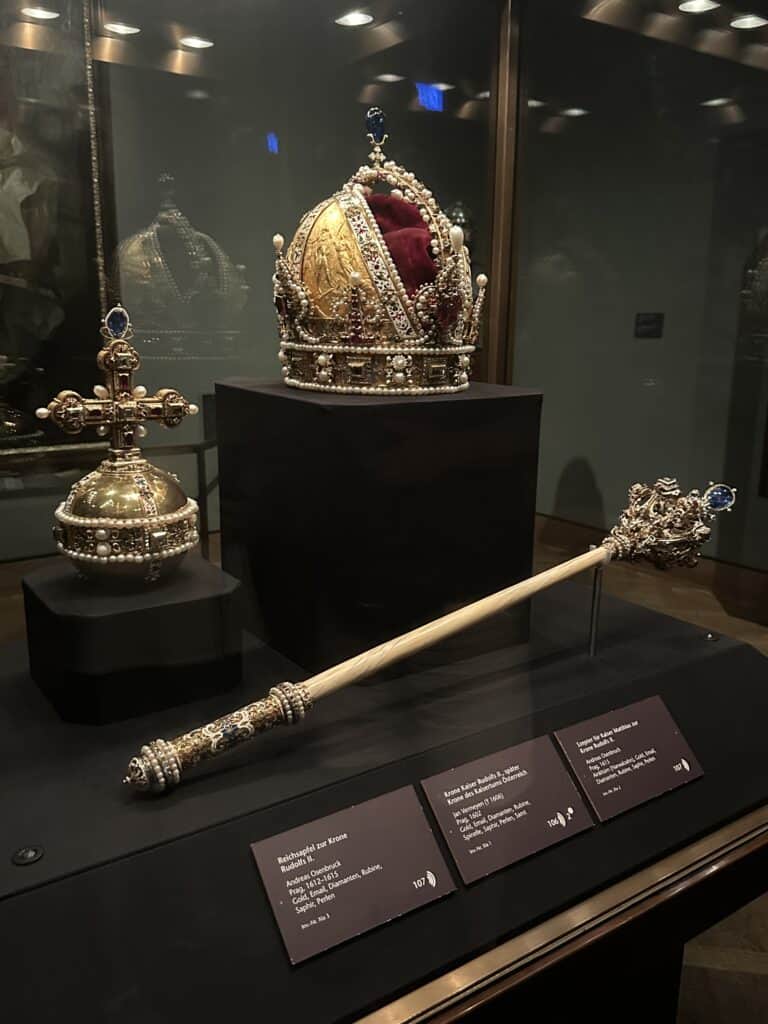
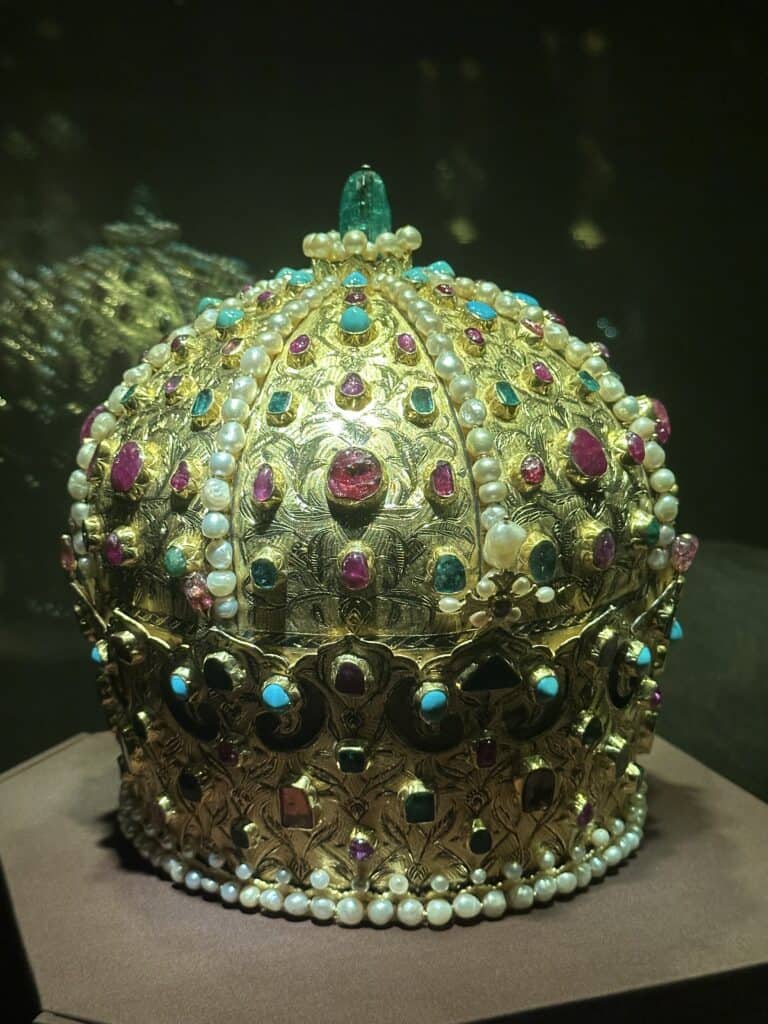
- The Austrian Imperial Crown, created in 1602 as the crown of Emperor Rudolf II, a masterpiece of goldsmithing encrusted with diamonds, pearls, and 140 precious stones.
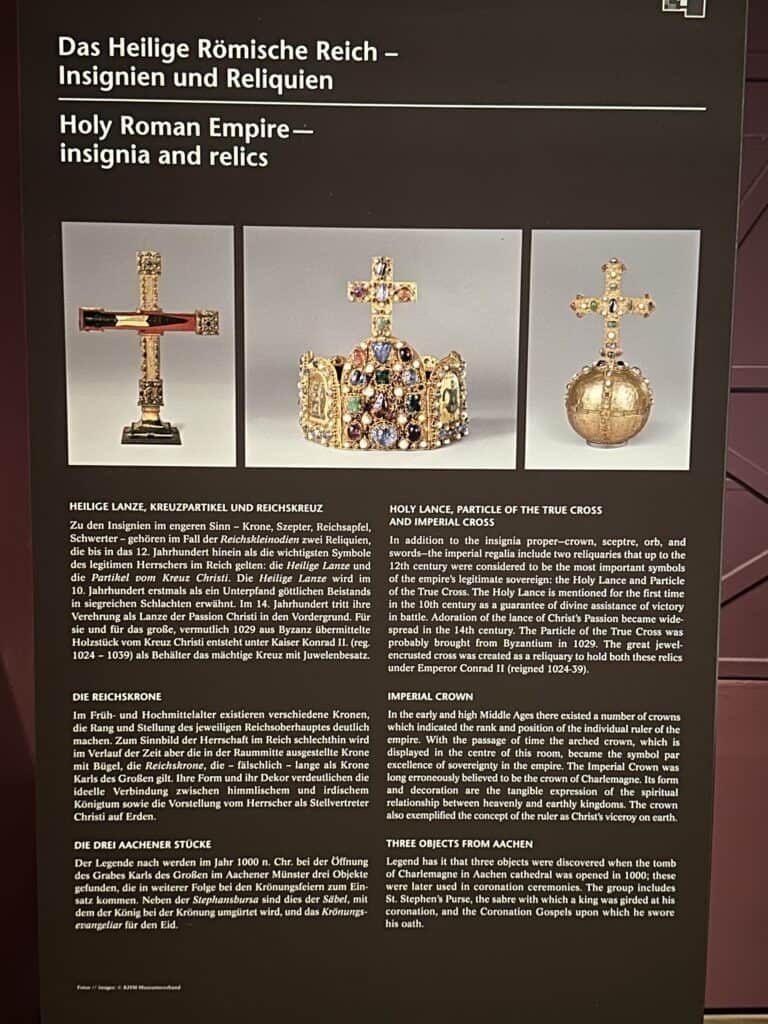
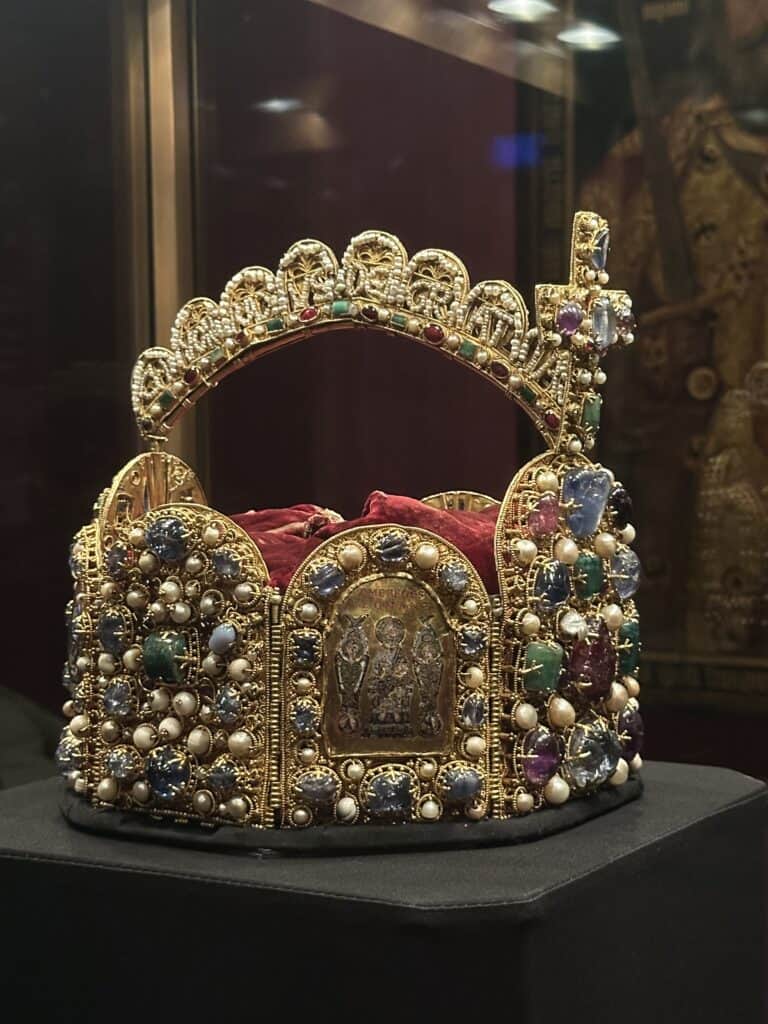
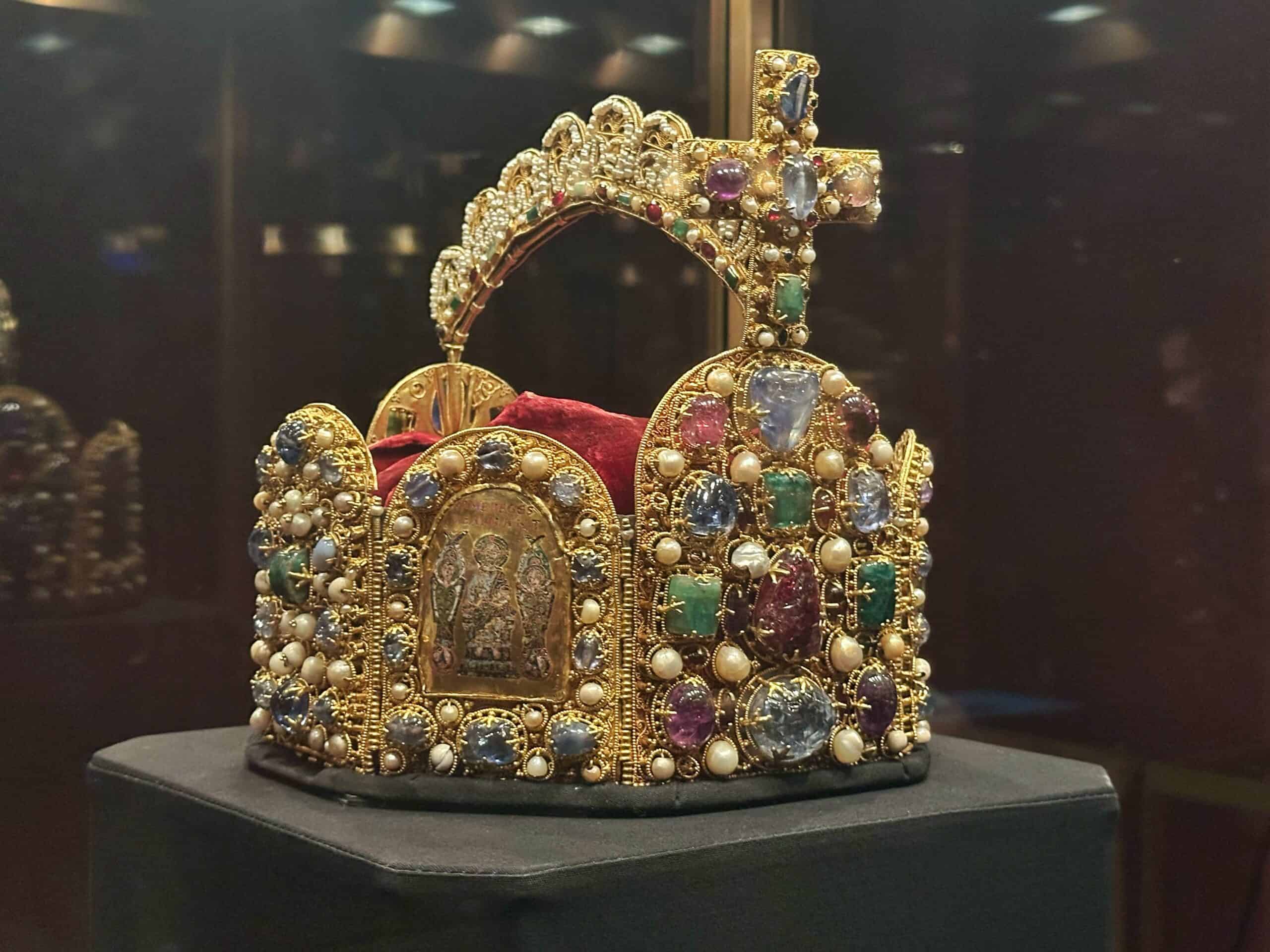
- The Crown of the Holy Roman Empire, unique for its octagonal shape, dating back to the 10th century, is the most important historical piece in the entire collection.
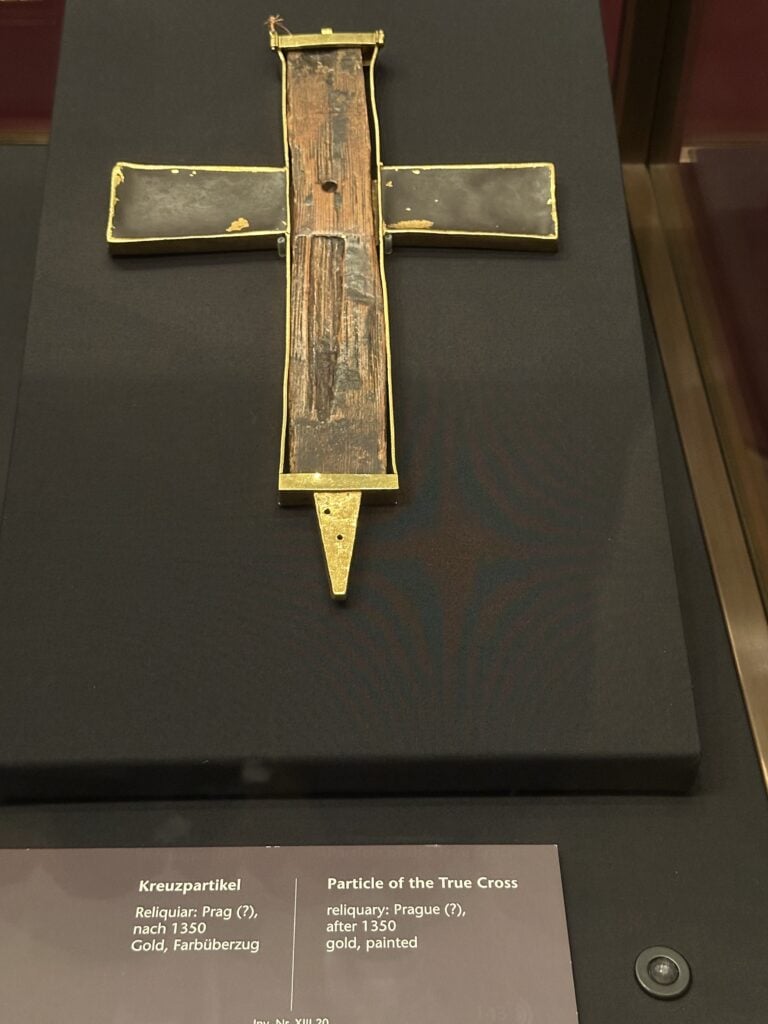
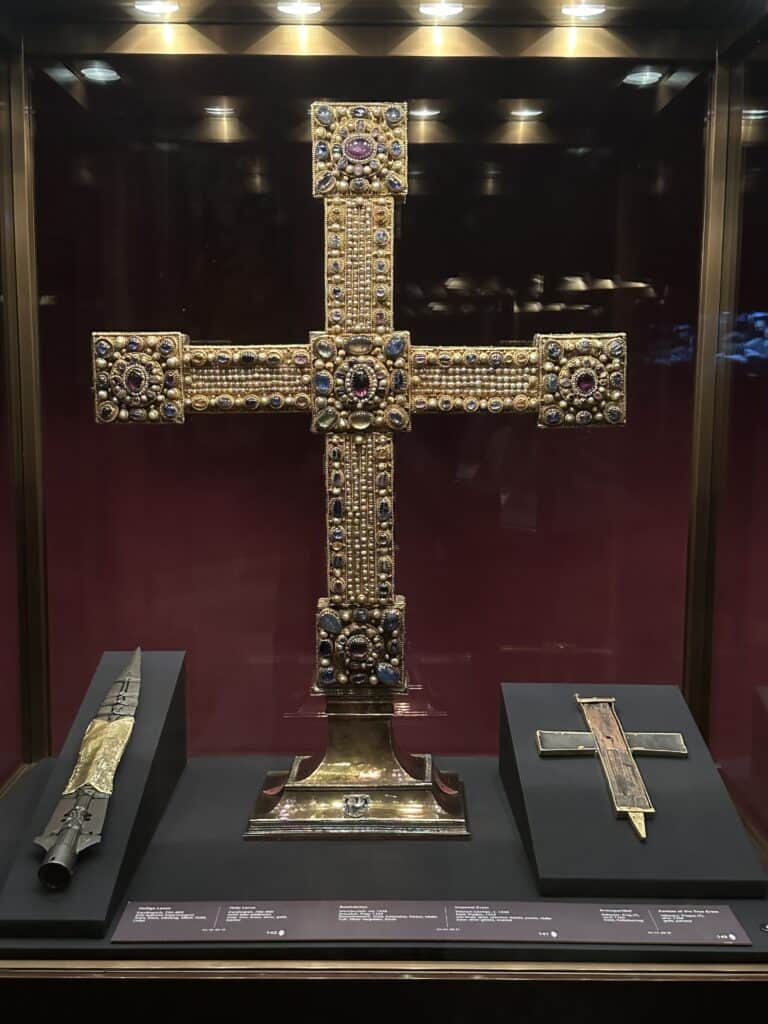
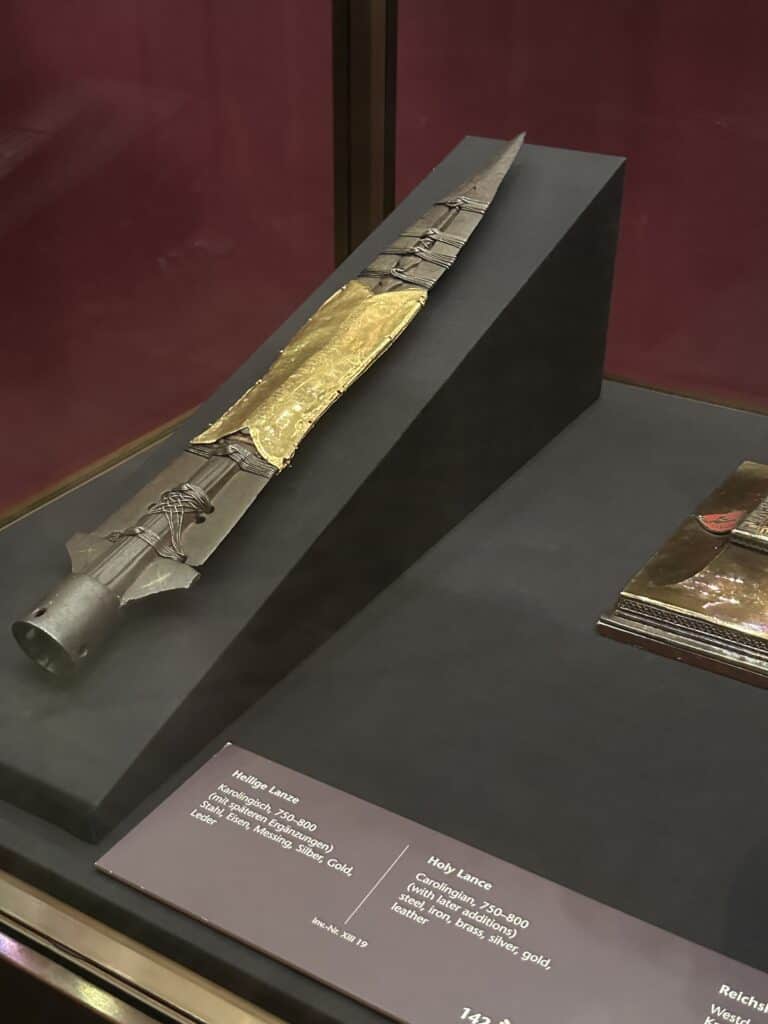
- The Holy Lance is one of the most famous religious relics in the world and, according to legend, contained a nail from the cross of Christ.
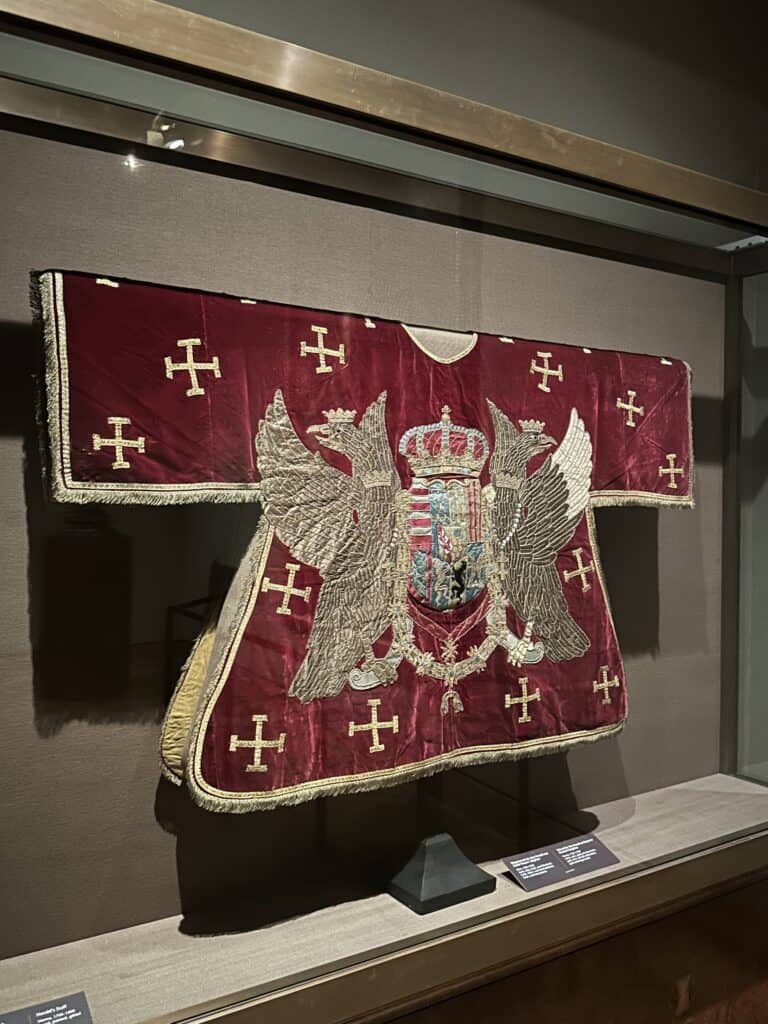
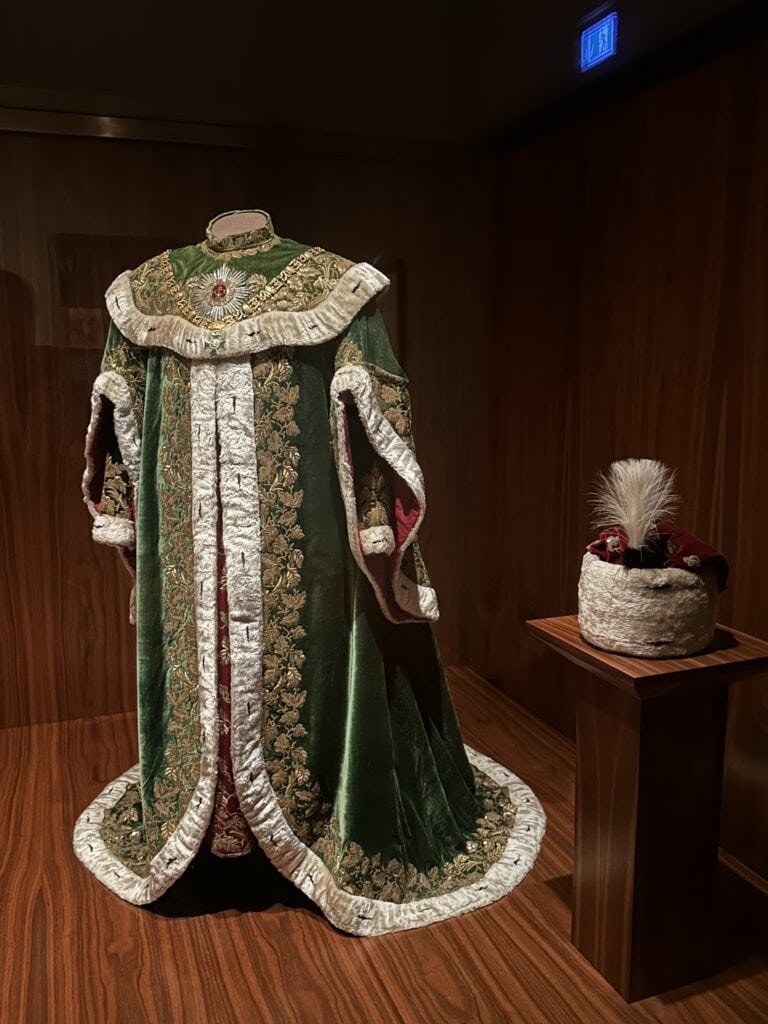
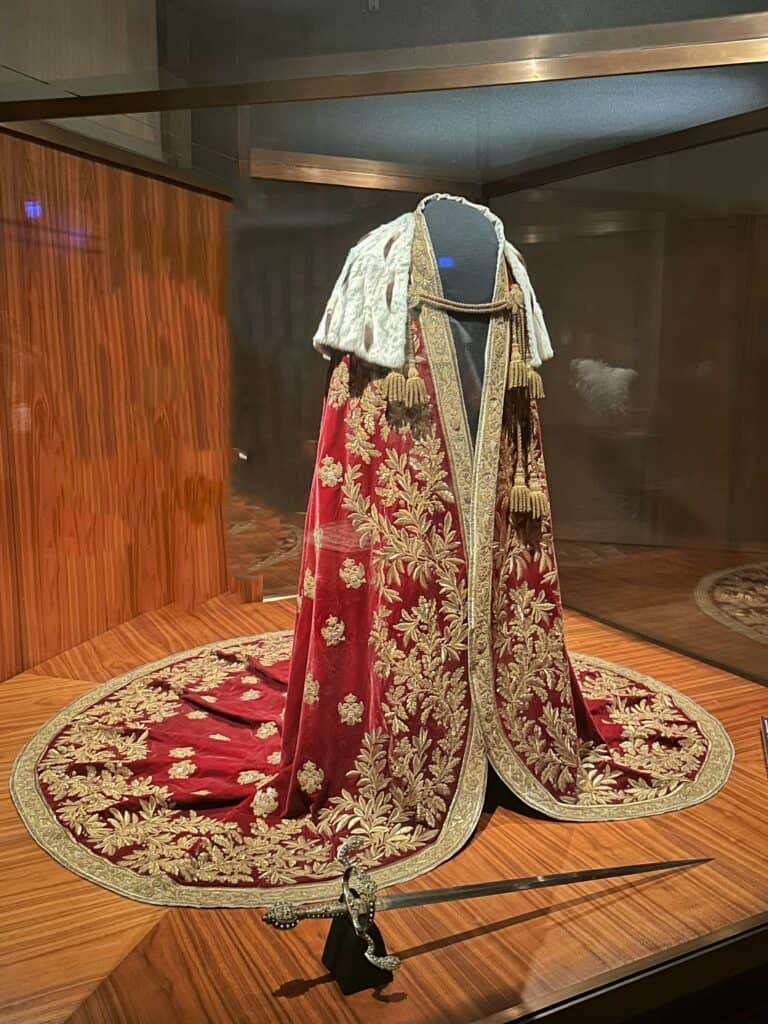
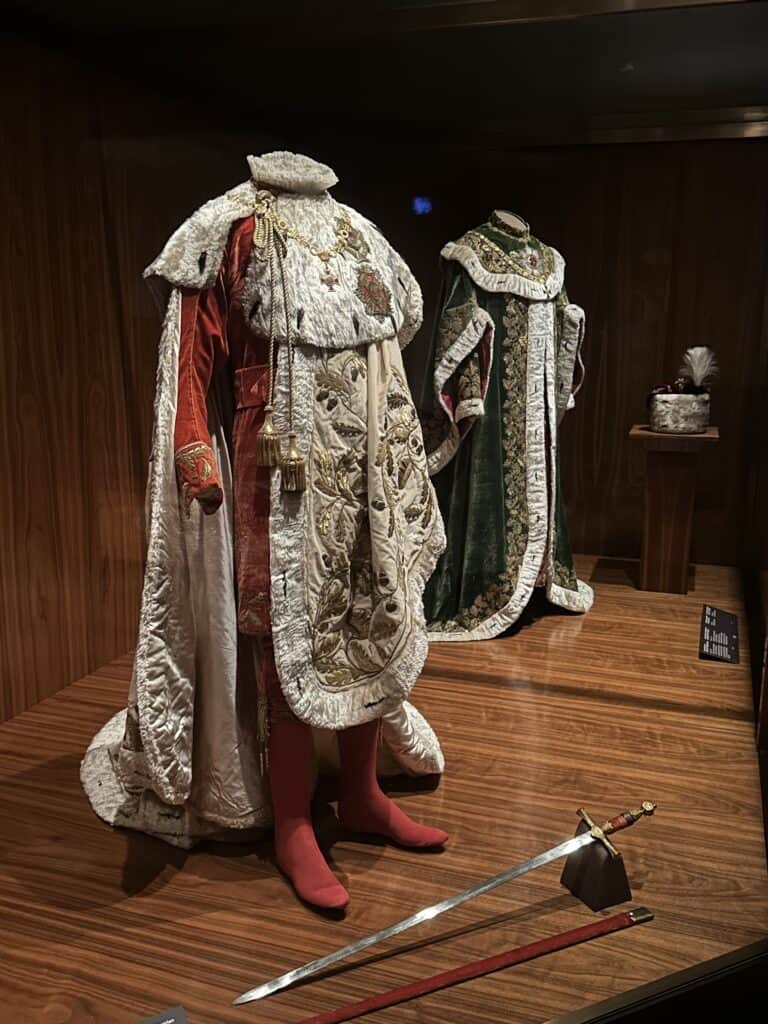
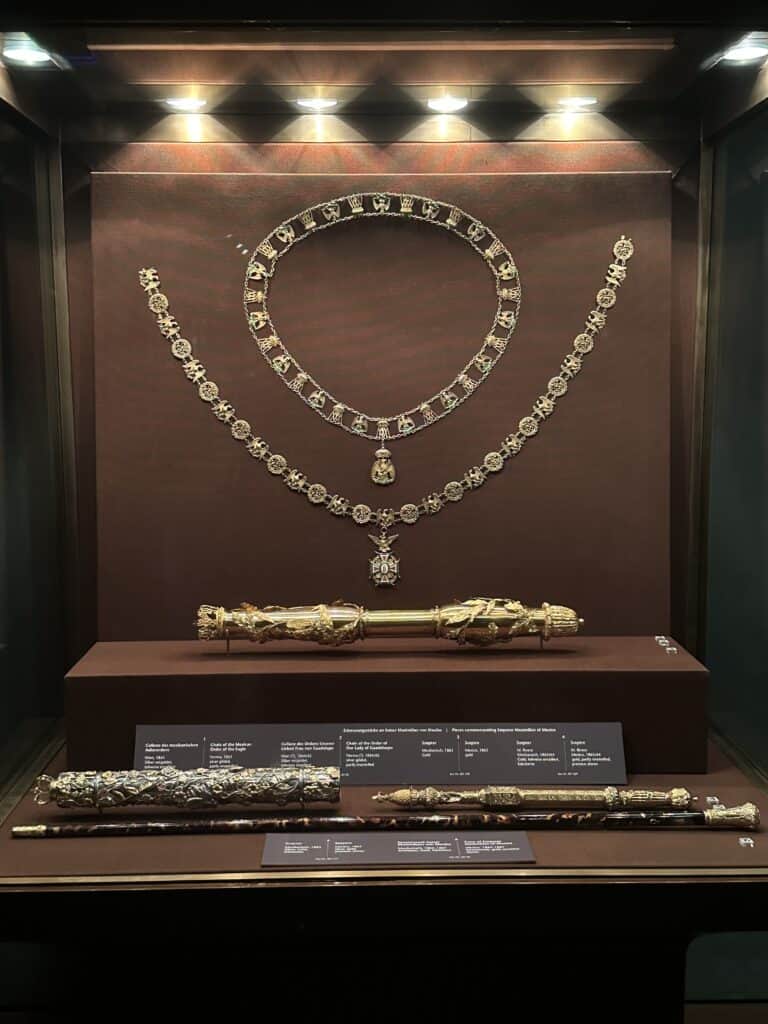
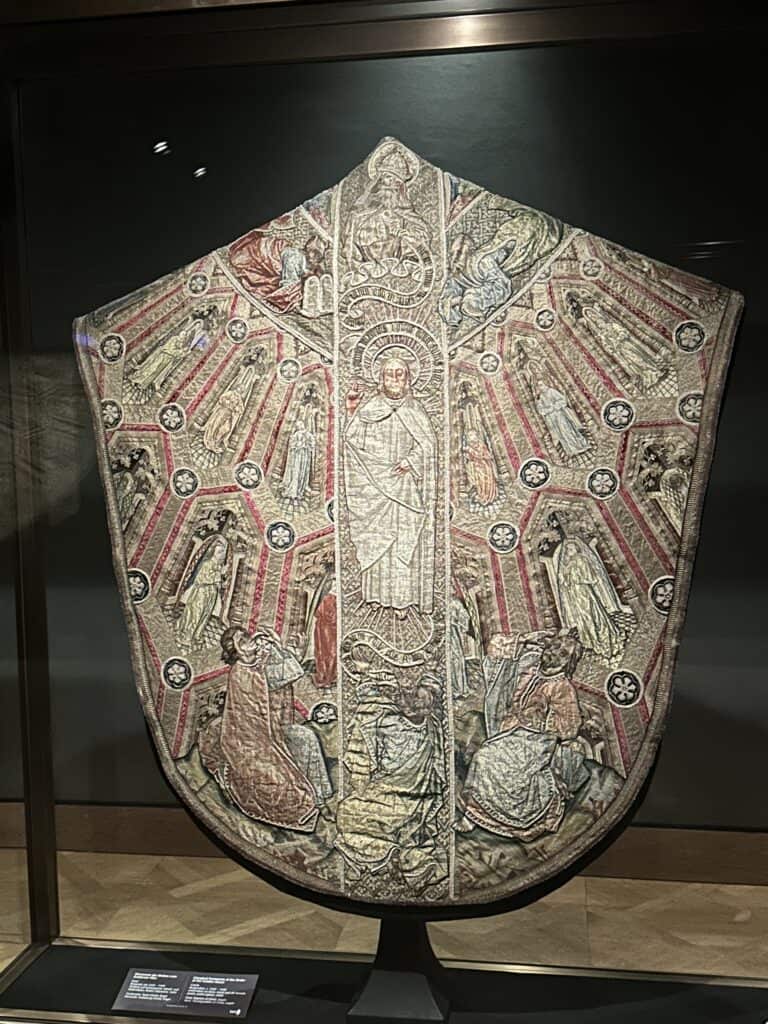
- The Treasury of the Order of the Golden Fleece is a collection of ceremonial robes and vestments associated with the prestigious order of chivalry.
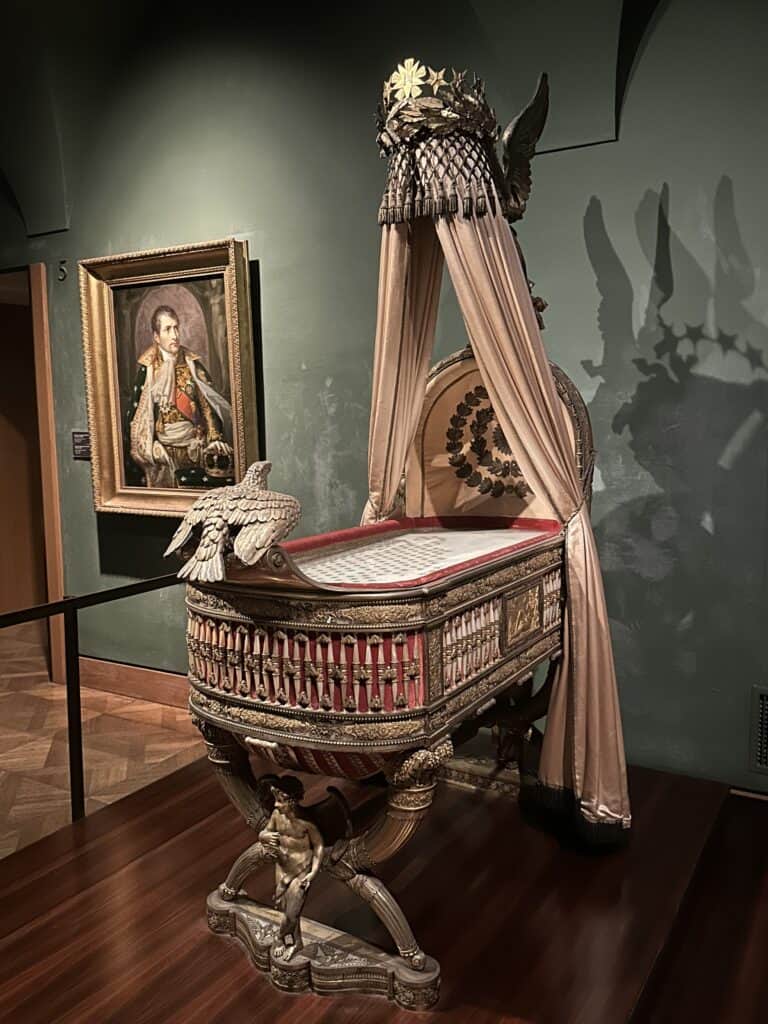
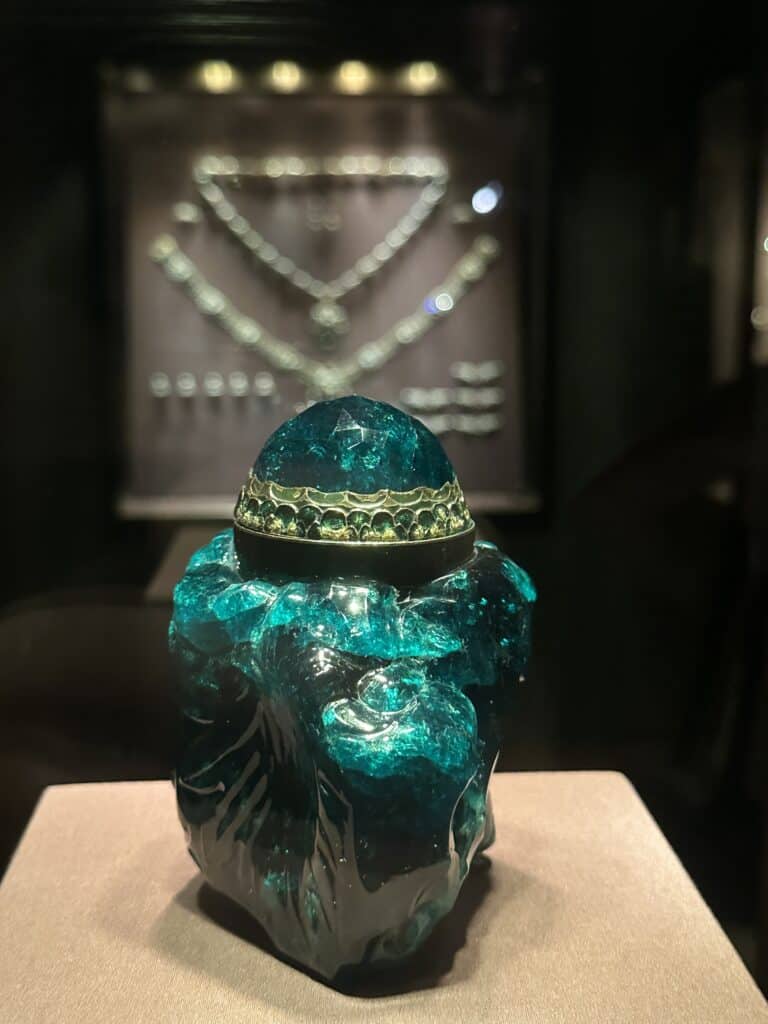
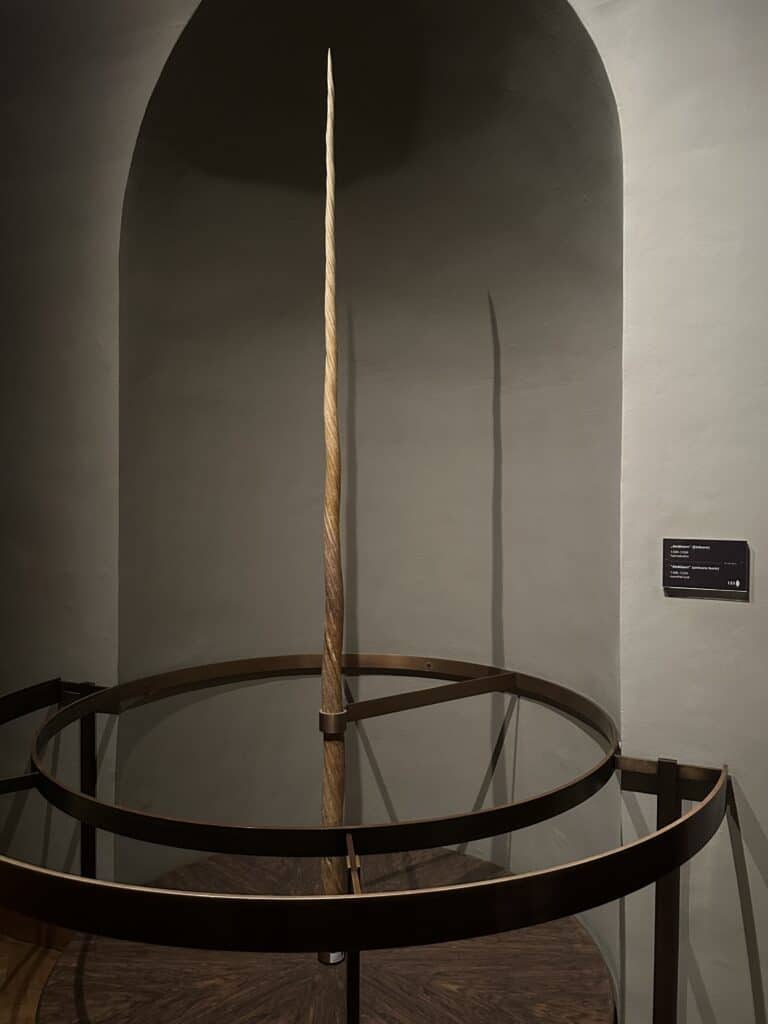
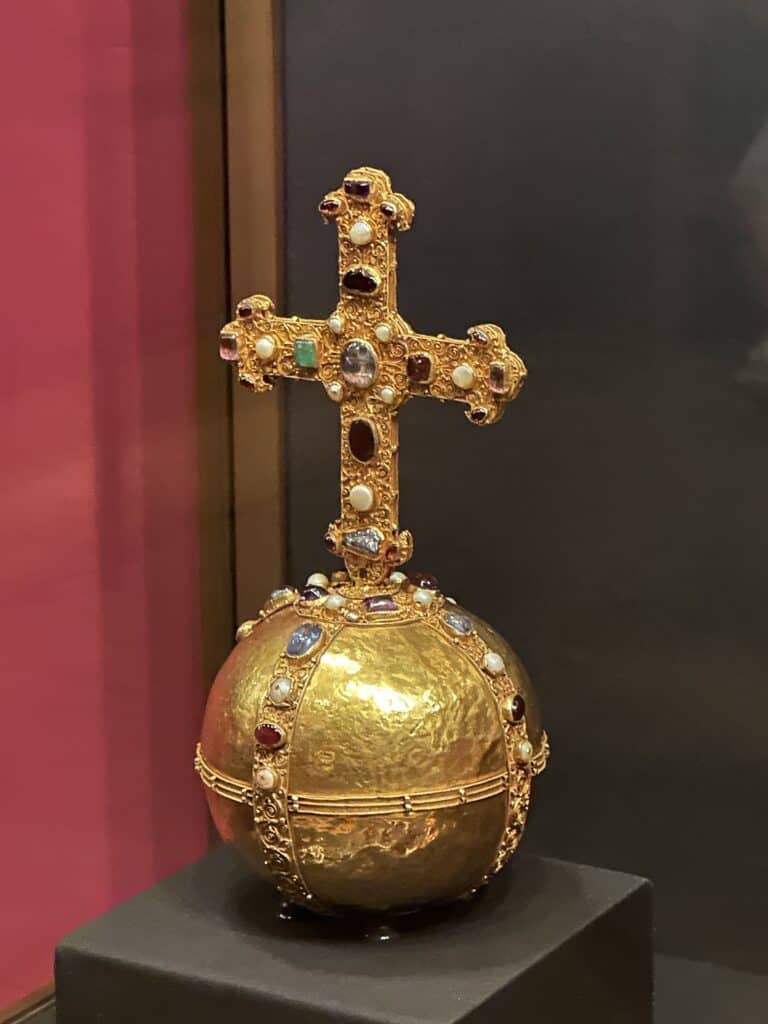
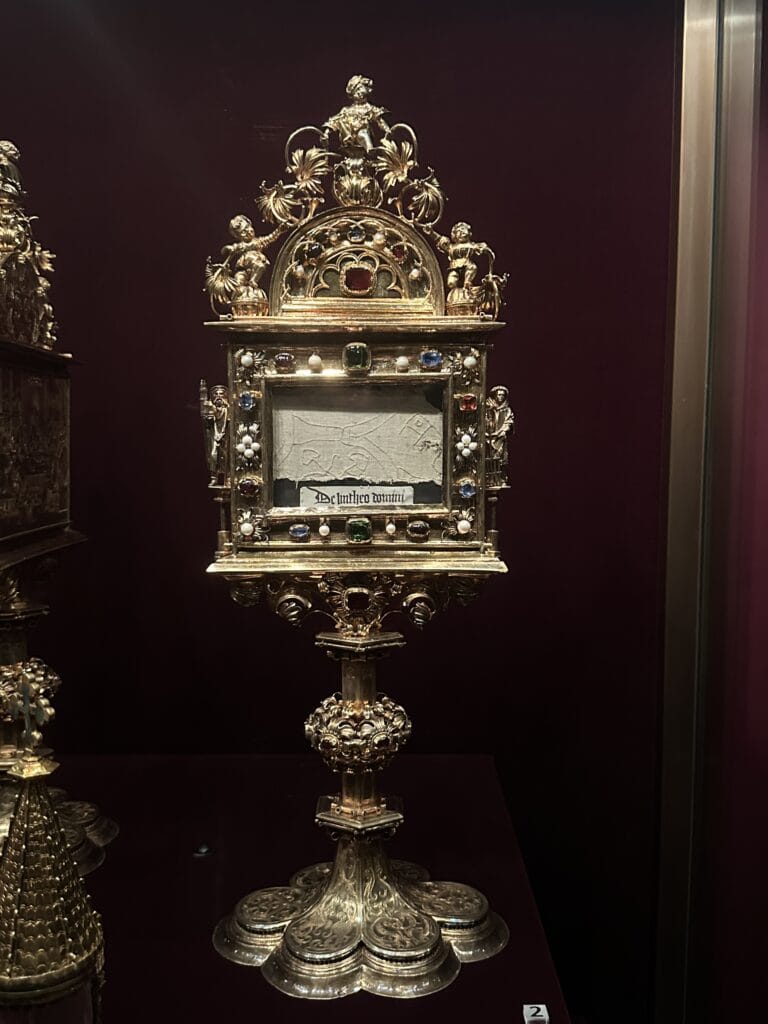
- Other legendary objects on display include the cradle of Napoleon Franz Joseph, son of Napoleon Bonaparte and Marie Louise of Austria, an agate cup once believed to be the Holy Grail, and a narwhal tooth once mistaken for a unicorn’s horn.
Until the end of the 18th century, the historic insignia of the Holy Roman Empire (including the famous octagonal crown and the Holy Lance) were kept and protected in Nuremberg.
In 1796, the unstoppable advance of Napoleon Bonaparte’s troops put these age-old symbols at risk. To prevent them from falling into the hands of the French emperor, the treasure was secretly transferred to Vienna, where it found its final and current home.
With the collapse of the Austro-Hungarian monarchy in 1918, the newly formed Republic of Austria confiscated the imperial assets, officially transforming the private collection into a national treasure accessible to the public.
In 1938, following the Anschluss (the annexation of Austria to Nazi Germany), Adolf Hitler ordered the forced transfer of the insignia of the Holy Roman Empire to Nuremberg for propaganda purposes.
The jewels were hidden in an underground bunker and miraculously survived the bombing of the city. In 1946, US occupation troops recovered the artifacts and permanently returned them to Austria.
Admission to the Imperial Treasury in Vienna is €18 for adults, while it is free for children under 19 (prices updated as of August 2026).